In 1985, my wife and I purchased Glenview on Dornoch Terrace, although we weren’t aware of its name at the time. I wrote a post about the house some years ago, but it wasn’t a full history. Having published numerous house histories in this blog, I thought I should rectify the situation for my own home and I’ve updated this post and added in some of our adventures with Glenview.
The land
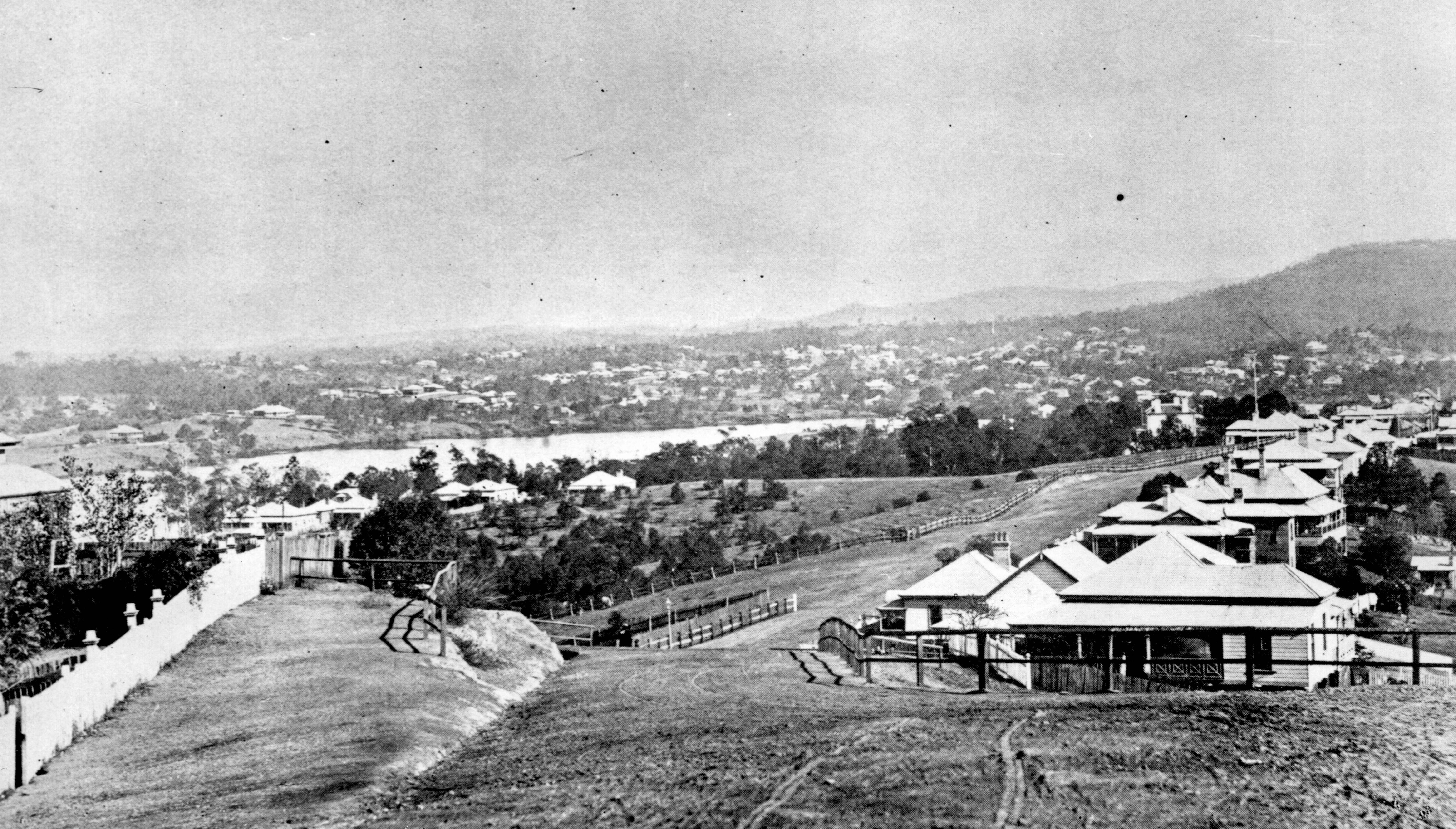
Glenview stands on the route of an ancient pathway that led down to the hunting grounds of the Turrbal and Yuggera people.
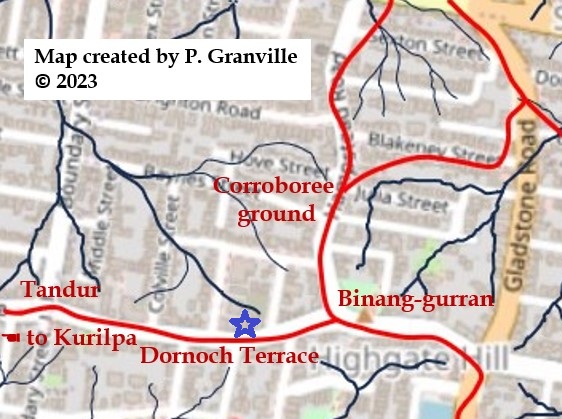
After their arrival, Europeans naturally followed these pathways, which slowly developed into roads. They were also used as boundaries in surveying work. On Highgate Hill, land was divided into portions of around 10 acres. At an auction held in August of 1860, Samuel Stevens purchased Portion 156 for £25/12/3, roughly equivalent to $34,000 today. It comprised almost 40,000 square metres.

In 1832, a 4 year old Samuel Stevens had arrived in Sydney with his parents and siblings from Surrey, England. The family moved to South Brisbane in 1849, and Samuel’s father James started a cooperage business. Samuel, his wife Jane and children later moved to Coorparoo, where he had purchased farm land. Their house, Homewood, stood on what is now Shakespeare Street.
After Samuel’s death in 1877, portion 156 was split into 80 subdivisions which were put up for sale as the Camberwell Hill Estate.
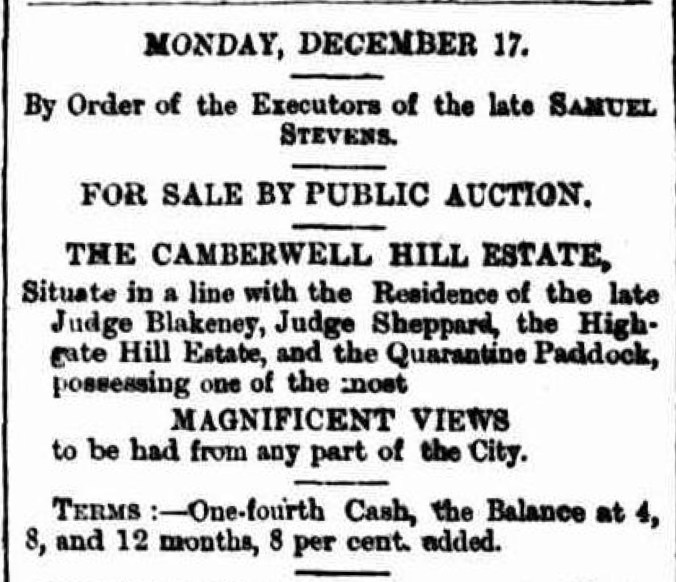
Blocks sold slowly, with sales inhibited by poor economic conditions, a lack of water, and perhaps the smell of the nearby government sheep quarantine paddock, which thankfully was relocated around the time of the sale.
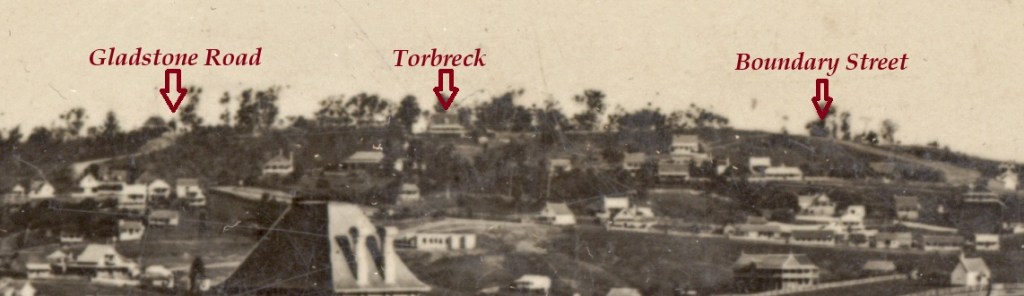
In 1881, titles to 4 of the subdivisions were transferred to Ann Sarah Smith, the wife of Henry Smith.

Glenview is built
Henry Smith was born in Yorkshire in 1850 and arrived in Brisbane in 1864 with other members of his family. They lived in Symes Street, Fortitude Valley. Henry had broad training, and he variously describes himself as a builder, carpenter, planing machinist, joiner, wood carver and bricklayer.

By 1874, Henry had a house and shop in Symes Street. In that year, he married Ann Sarah Baker, who lived around the corner in Leichhardt Street. A few months later, he entered into a partnership with Robert Hartley Lofthouse, offering building, carpentry and joinery services. They took over a steam joinery in Constance Street, adjacent to Symes Street, and expanded the business. Here they manufactured doors, window sashes, skirting boards, architraves and other similar timber requirements for buildings.
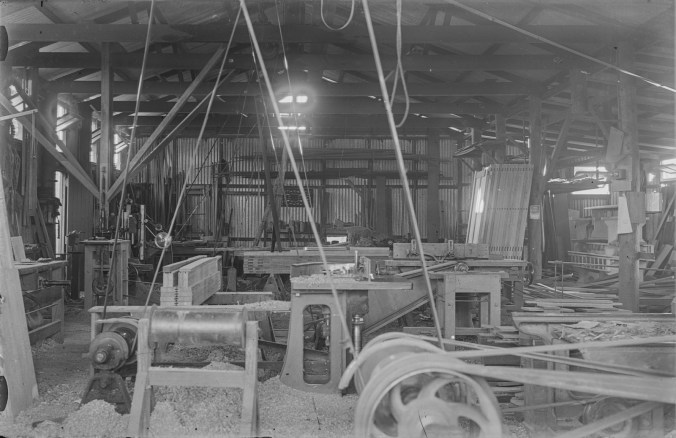
In mid 1876, the partnership was dissolved, and Henry took over the business.

Just under a year later, Henry was insolvent. His problems began in 1876 when a customer, building materials retailer R. Hutchins & Company, went bankrupt owing Henry a considerable amount of money. With strong competition and poor market conditions, he was unable to recover. Henry had mortgaged his home and shop to his father, land at Bulimba to McGhie and Luya sawmillers, and his tools and machinery to his bank.
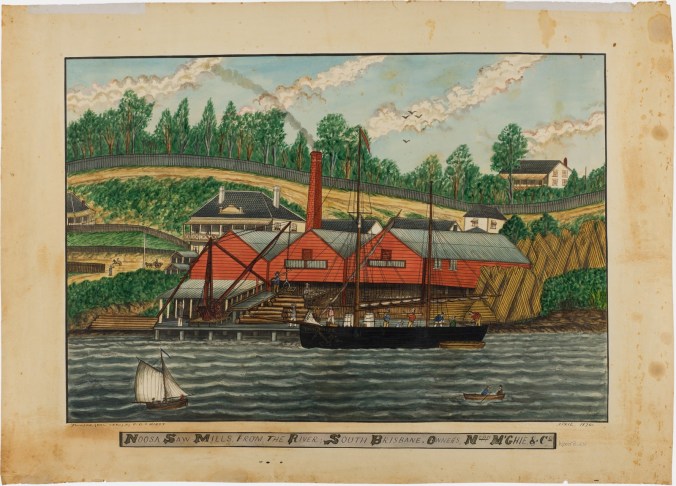
Henry must have been recovering financially when he and Ann purchased the Highgate Hill block in 1881, although during the construction period, Sarah and Henry mortgaged the property for £250. Even before the title had been transferred to Ann, Henry was busy building a fence around the property. He began building the house in 1882, and from an advertisement for secondhand bricks, it seems the family, including by then three children, may have been living on the site.


I suspect that Henry used bits and pieces of leftover timber from his business to build the house, as there is some strange joinery. For example, the architrave profile and width changes halfway around one doorway, with the change masked by a corner block.

Henry is listed in the 1883 Post Office Directory as living in the house, now called Glenview, where Ann had their fourth surviving child. The following year they began renting it out.

The river views mentioned were possible at that time as there were few houses and the hill had been stripped of timber over the preceding 50 years. There would also have been a good view of the glen giving the house its name, looking towards the river and today’s Paradise Street.
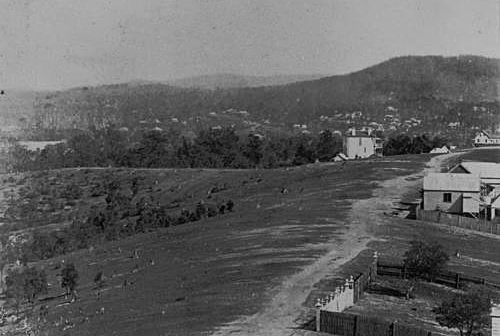
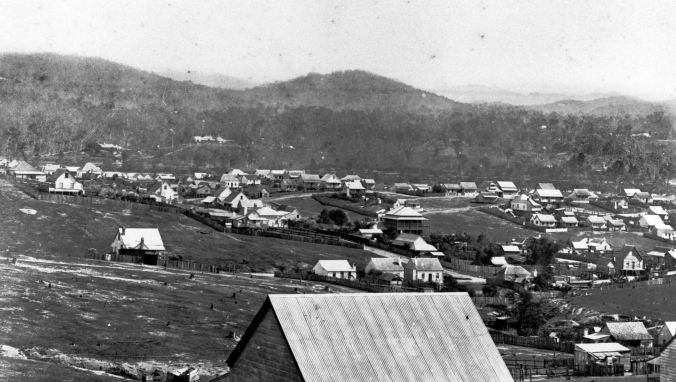
For rent
Henry built the house with some features usually only found in larger dwellings such as double walls, double hung sash windows, cedar joinery, a fireplace and an impressive entry.
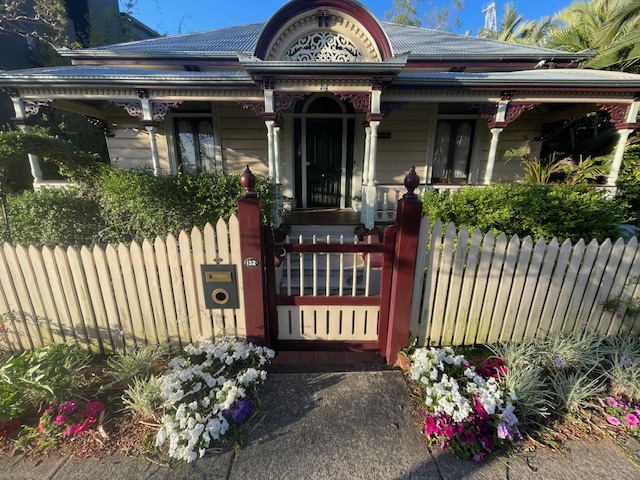
He constructed a lower floor of two rooms in brick comprising a kitchen and servant’s room. He was probably targeting middle-class tenants and a few examples will illustrate his success.
John G. W. Barnes, accountant and manager at Boyd Morehead’s mercantile and trading company, rented Glenview from 1885 to 1890 before purchasing the substantial house Wandoo at what is now Camp Hill. The house had come onto the market after its owner, Edward Mann Barnett, had become bankrupt due to embezzlement by an employee.

Domestic servants were typically newly arrived young immigrants, and the Barnes advertised regularly over the years of their occupation of Glenview.
They advertised for help around the house as well as for domestic servants..



Public transport to the area was limited to the Brighton Road omnibus mentioned in the advertisement above and another that travelled along Gladstone Road (see my post Brisbane’s Omnibuses). The West End tram line was extended down Hardgrave Road to Ganges Street in 1897 and the Dutton Park line on Gladstone Road, which passed the top of Dornoch Terrace, was completed in 1901. For more on the tram system, see my post Life with Brisbane Trams.

Dermot O’Donohoe, a solicitor recently arrived from Ireland, and his family lived in Glenview for a few years from 1895. The O’Donohoe family later lived in Norman Park.
In the period from 1896 to 1899, Glenview was rented by Lucy Fraser, whose husband Simon had died in 1889. She was forced to leave their home Torbreck further up Dornoch Terrace after the family property business failed in 1892 in the wake of the 1890 property crash.
She had mortgaged the Torbreck property for £5,400. In around 1908, the family built a new Torbreck in Wahcumba Street, Dutton Park. My post The Three Torbrecks has more on this.
The Hopkins family
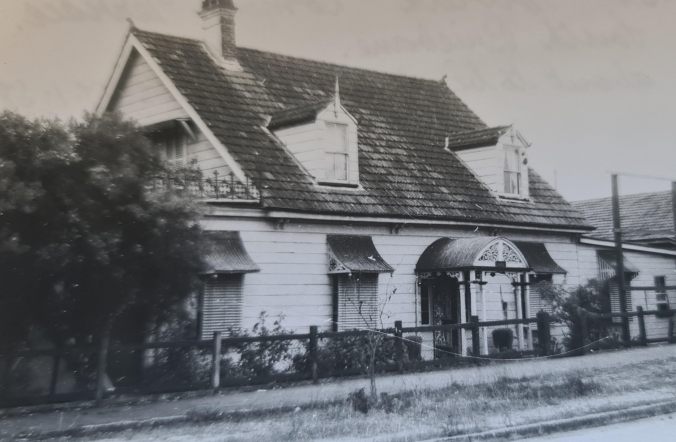
In 1893, the Smiths sold Glenview to Fanny Hopkins, however the house continued to be rented out for some time. The Hopkins family moved in sometime around 1899, and members of the family were to live there for almost 50 years.

A 16 year old William Hopkins, who was born in Cambridge, arrived in Brisbane in 1860 aboard the Montmorency with his mother Susannah, and step father William Webb. He found work as a labourer. Four years late,r in 1862, Fanny Reyland arrived on the Ariadne. She seems to have travelled alone. Fanny was born in Somerset in 1845. In 1863 they married, both requiring permission as they were under 21. Fanny’s permission came from James Stone, who is named as guardian.
In the 1870s, the family was living in what was described as Kedron Brook, in the Lutwyche or Kedron area. All of their 8 children, except the youngest Albert who was born in 1886, attended the Bowen Bridge State School. It was located in the current Windsor Memorial Park, and was replaced by Windsor State School in 1916.
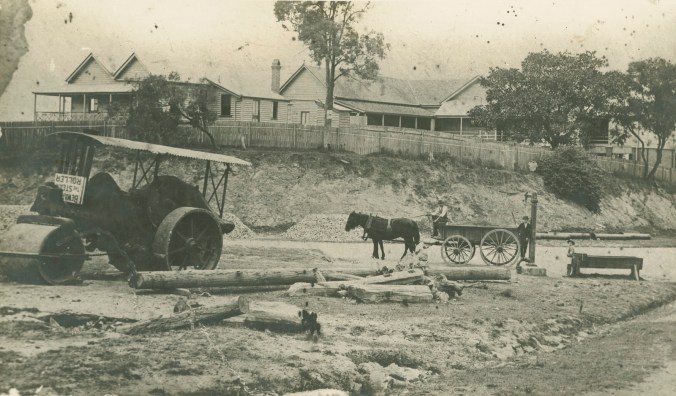
William worked his way up through the ranks and in the 1870s he was a ganger, or overseer, of road works. After its creation in 1879, he worked for the Ithaca Divisional Board. Initially it covered a large area stretching from Milton in the East to The Gap and beyond the Enoggera Reservoir in the West.
In 1881, he was promoted to foreman, and was earning £230 a year, which was a good salary at the time. He resigned in 1887 when the Division was divided into 3 parts. Hopkins then worked as a contractor, and in 1896, he was elected as an alderman in the Pine Divisional Board, later known as the Pine Shire Council. The southern border of the Shire was Enoggera Creek.

The Hopkins at Glenview
William and Fanny with their 6 unmarried children had moved into Glenview by 1899, having rented it out for 6 years. It was around this time that a single floor extension was built at the rear of the house. Glenview was far too small for 8 people and a servant, although by this stage domestic servants were becoming too expensive for families like the Hopkins. The extension was demolished in the 1970s.
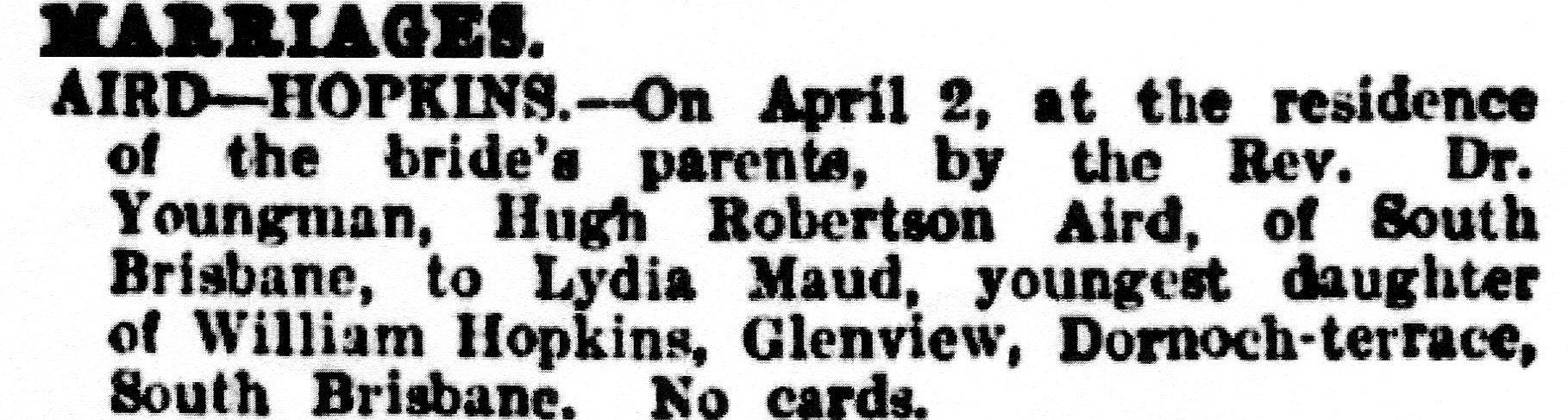
Daughter Alice married in 1900, and in 1902, another daughter, Lydia, was married at Glenview.
The Hopkins must have been quite secure financially. Fanny and her daughter Susie either had 2 trips back to England, or one that took a long time to plan.


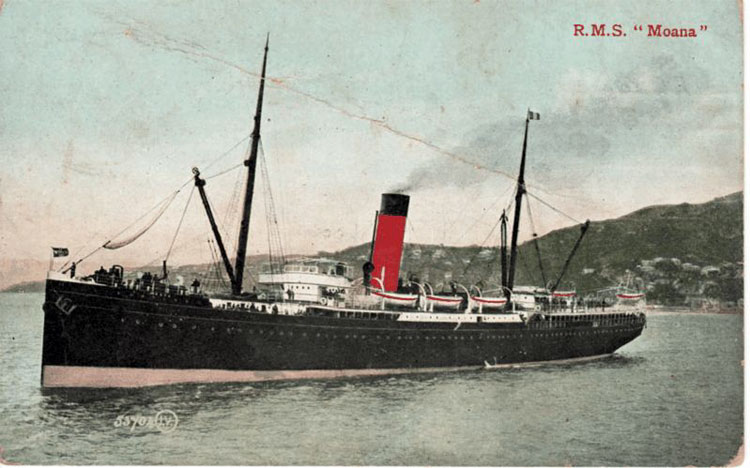
It was common for people to notify friends, and everyone else in the community for that matter, of what was happening in their life.


Of course, announcements of family events were common, as they continue to be today. Fanny passed away at Glenview in 1908.

Social gatherings, or “at homes”, were also effectively organised by newspaper announcements, with the common availability of home telephones many decades away.


Sometime in the early 20th century, there was a fire in the house. The original pine floor boards in the front half of the house were replaced with hardwood.


Susie and Emily Hopkins never married, and continued to live in Glenview. The original block of land was a large corner block of 55 perches, or about 1,400 square metres. In 1941, the sisters sold off 660 square metres on the corner of Colton Street.
Our neighbour for many years, Mrs. Tuch, and her husband built their home there. It was designed by a Hungarian architect who also designed Mr. Tuch’s pharmacy at Mt. Gravatt. Mrs. Tuch told us that when they purchased the land, there was still a garden with a lily pond on that part of the property.

Susie Hopkins died in 1943, aged 77 and Emily in 1947 aged 73. Their sister Alice Craigie, who had married in 1900, lived in nearby Audenshaw Street until her death in 1955.
Rental again
After Emily’s death, the house was sold by two of her brothers who were her heirs. The Mott family purchased the house in 1948. From electoral role entries, it appears that Glenview was divided into 3 flats. The Motts owned the house until 1970, after which it passed through numerous hands until we purchased it in 1985 for $92,000.
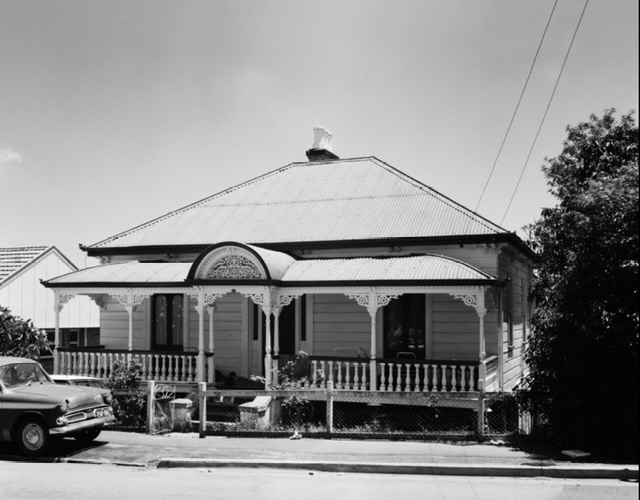
Our time in the house
After moving into Glenview in 1985, we slowly returned the house to something like its original appearance and added additions such as staircase between the two floors. What follows is a summary of some of the discoveries we made and work we organised.
Artifacts
Over the years, we’ve discovered a small number of artifacts around the house. Downstairs was a relatively recently erected wall and behind it we found a collapsed fireplace. Its original purpose was probably to heat the servant’s room. Cleaning it out, I discovered a brand new horse stirrup. Unfortunately there was nothing else of interest, apart from a lamb skull.

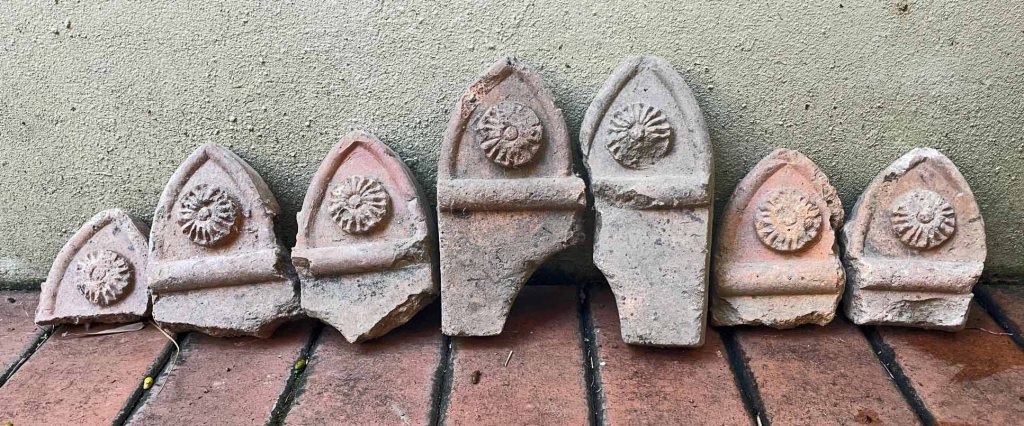
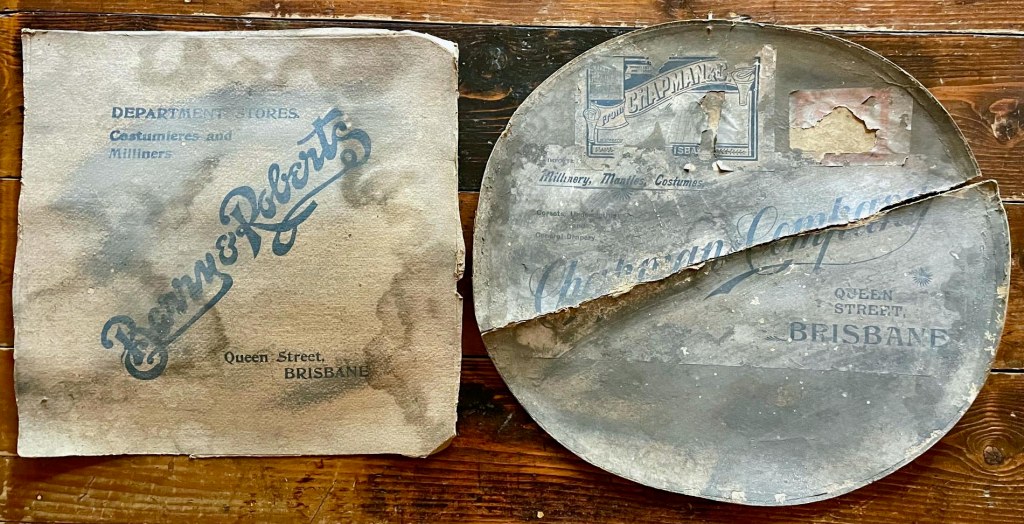
In the garden, over time I’ve dug up a number of pieces of terracotta garden edging. Above the ceiling, some of the ventilation holes had been covered with pieces of delivery boxes to stop dust falling. One of them had a delivery stamp showing a horse and cart, probably dating it to the early 20th century.
Original fittings
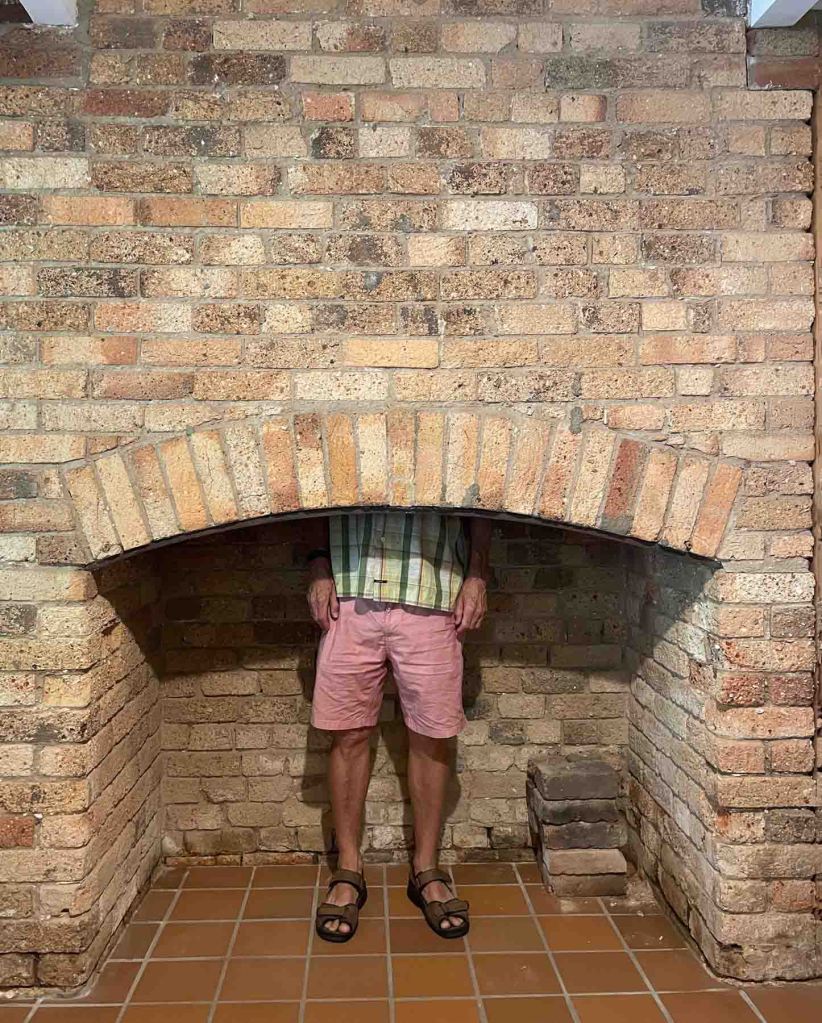
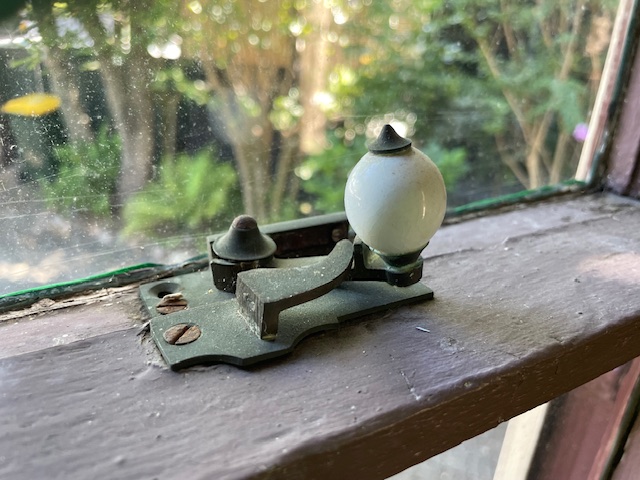
Some original fittings remained, including a door bell pull that originally connected to an internal bell via a system of rods and levers.


Restoration
The house had been “modernised” in the 1970s. Fortunately, before we purchased Glenview, the previous owner had removed the styrofoam panels lining the ceiling after one fluttered down and landed on their faces during the night. They had also replaced the verandah floorboards, which had been covered with small bathroom tiles.
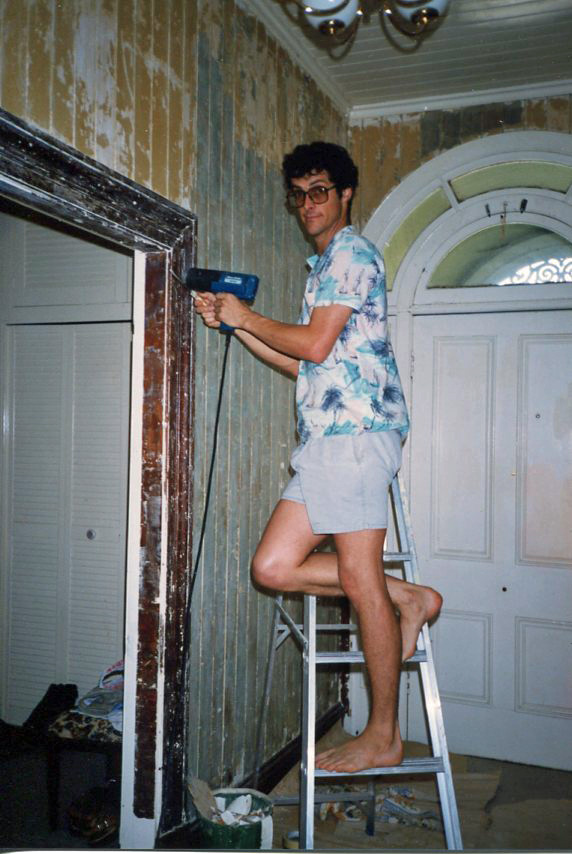
The beaded groove in the walls had been filled with spakfilla and delightfully wallpapered. I spent hours every night for months softening and removing the filler and preparing the walls for painting, room by room, over some years.

The doors, skirting boards and architraves had all been painted white. The original shellac coating must have been in poor condition, and the paint had penetrated deeply into joints and parts of the cedar making it very difficult to completely remove without damaging the wood. However, my work was richly rewarded when I uncovered the beautiful doors with their book-matched fiddleback maple panels. Unfortunately, two doors were no longer in place.


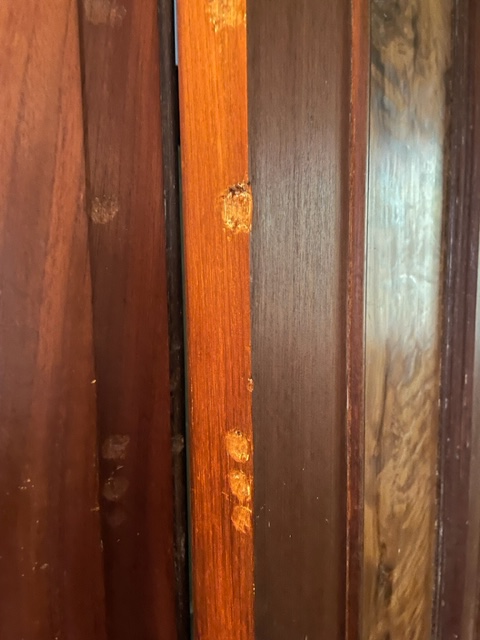
One door had curious spherical indentations. After years of subconscious thought, it finally occurred to me that the door had been used to crack macadamia nuts, once commonly grown in Brisbane suburbs.
The upstairs windows are all double-hung sashes, and when we bought the house, many were no longer in a working state. I found all but one of the seven and a half pound weights where the ropes had broken, lying behind the architraves, and purchased a replacement weight in a demolition yard.
Each room originally had corner glass panels in the windows, with different rooms having red, blue or green. Some had broken over the years and had been replaced with plain glass. Back then, someone in Sydney could reproduce diamond-cut panels and I had replacements made.


The windows have plain glass panels at the top.

A fire next door
On a cold June night in 1998, squatters at number 134 next door lit a fire to keep warm, and narrowly escaped asphyxiation crawling out of the smoke filled house after it caught fire. Luckily, the wind blew the leaping flames away from Glenview as our 8 year old daughter rang the fire brigade. They kept Dornoch Terrace closed all night with an appliance on the street in front of the smouldering remnants of the house.
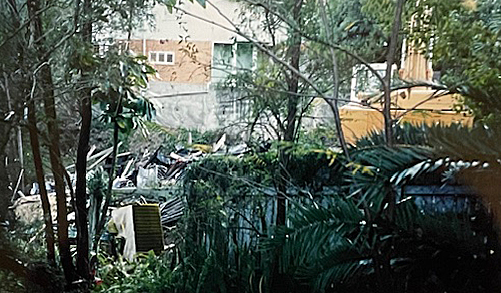
I pointed out one of the squatters staggering away to a policeman, but he wasn’t interested. A few days later, the item below appeared in a local newspaper saying that he had “absconded”.

The roof and verandah
In 2011, we needed to repair the front verandah where a leaking roof had caused some wood to rot. This triggered the entire replacement of the 130 year old roof, which was corroding on the overlaps. We chose Z600 galvanised steel as the closest to the original. The area was hit with a severe hail storm in 2016 and while many houses on the street needed their roofs replaced, we had just a few minor dints.


We chose not to paint the roof. Keith Jarrot, in his book History of Highgate Hill, mentions that painted roofs were unknown in Brisbane until the late 1920s when the fashion of painting them red began. This also avoids the cost of future repainting. A disappointment was when the builder used guttering with slots without discussing the issue with us. He told us that the only Brisbane supplier of traditional ogee guttering had ceased production.
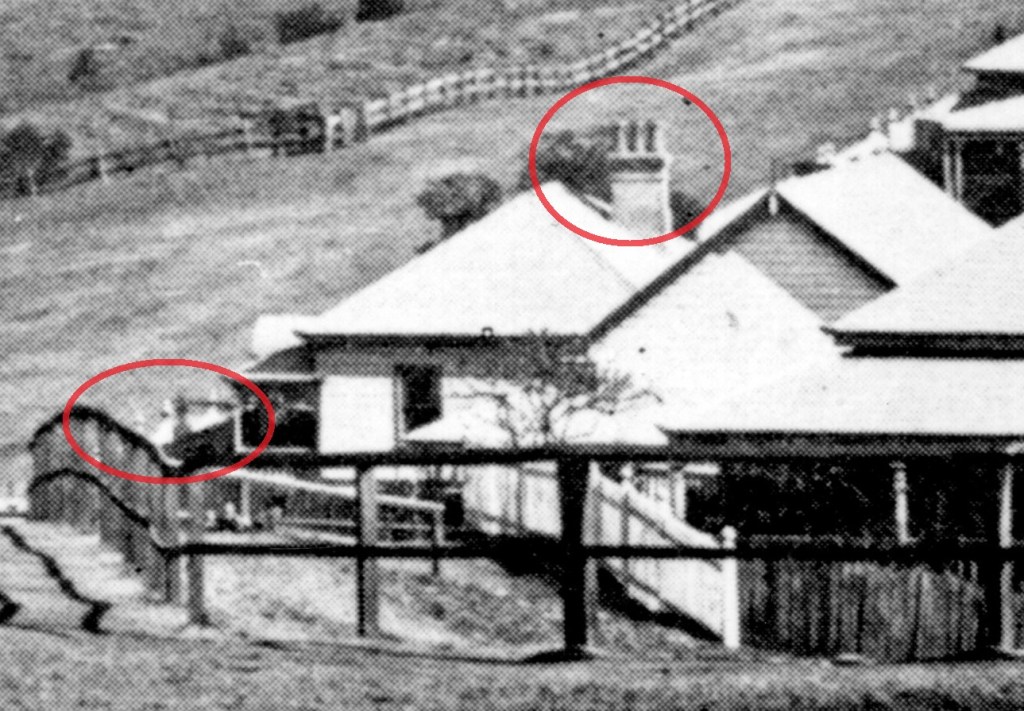
We also built a new fence, modelled on the blurry detail in a 1902 image.

A big hole next door
We experienced some trepidation in 2016 when excavation for an apartment block next to our house caused the house to shake. Despite having no real foundations with the brickwork resting directly onto the rocky ground, there was no noticeable damage.

The chimney
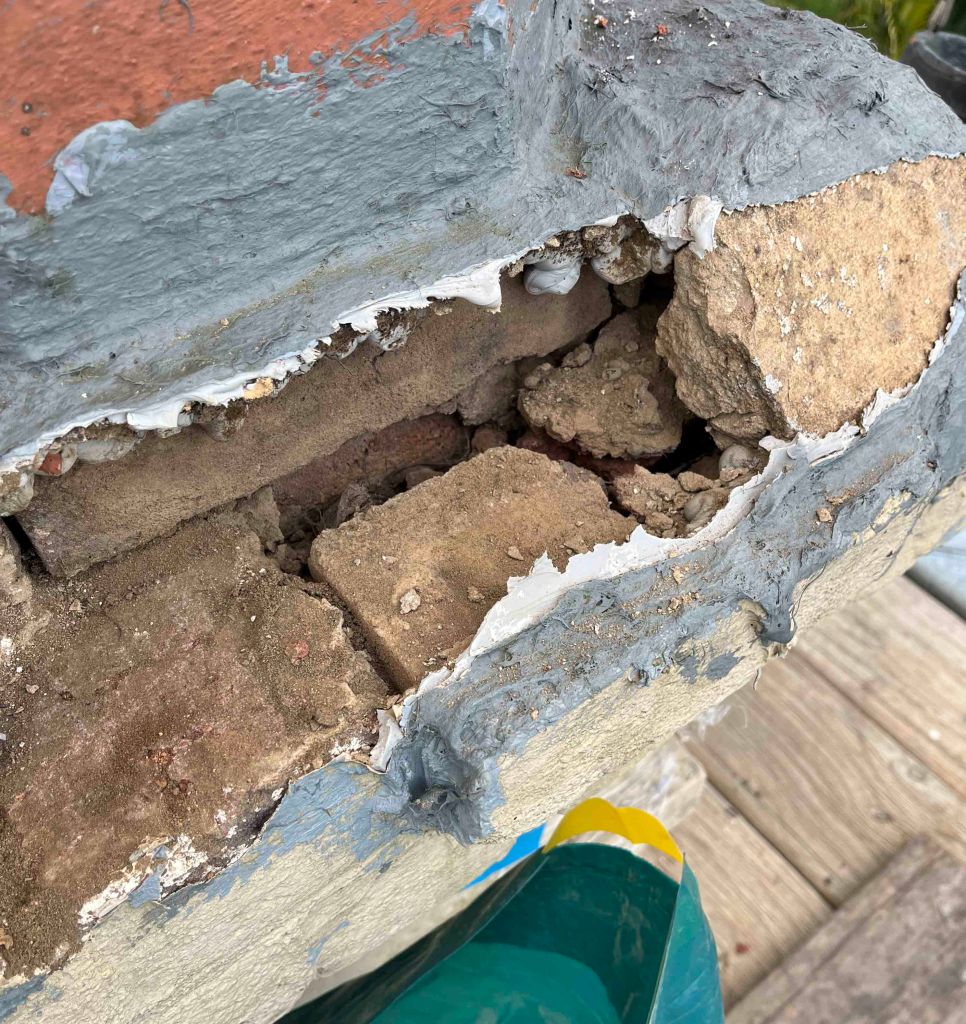
A few years ago we started getting leaks around the chimney in heavy rain. An inspection showed that the mortar was crumbling badly. Our three large terracotta chimney pots were sitting in place held down by little more than their own weight. The cause was that the chimney had been painted decades ago, which inhibited the mortar from drying out after rain.

With a time consuming and expensive skilled repair job, we rescued what is perhaps the most distinctive feature of Glenview.
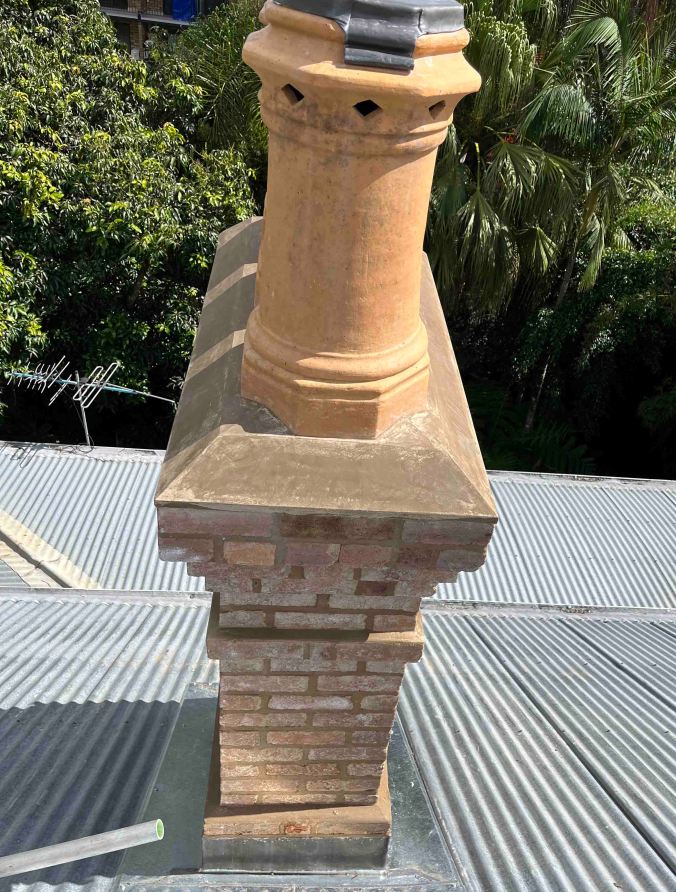

Over its 142 years, Glenview has seen births, marriages and deaths, survived fire and seen its surrounds change from cleared bushland to high rise development. After 40 years, we are now the second longest inhabitants of the house.
Glenview is listed in the Brisbane City Council Heritage Register, with citations in three categories – historical, representative and aesthetic.
For more on the history of Dornoch Terrace, see my blog post Dornoch Terrace – a Pathway Through Time.
© P. Granville 2025
 Highgate Hill and Its History
great post Paul!! This is exactly what we want to achieve with that web site idea.. putting together the bits and pieces sourced from Trove and maps and what we know from the BMDs for Qld..to build up a picture of the neighbourhood and those who lived there. well done!! Jenny
Jennifer Freeeman email: jenniffreeman@yahoo.com.au
From: Highgate Hill and Its History To: jenniffreeman@yahoo.com.au Sent: Friday, 24 June 2016, 20:19 Subject: [New post] A Highgate Hill House circa 1883 #yiv3017400419 a:hover {color:red;}#yiv3017400419 a {text-decoration:none;color:#0088cc;}#yiv3017400419 a.yiv3017400419primaryactionlink:link, #yiv3017400419 a.yiv3017400419primaryactionlink:visited {background-color:#2585B2;color:#fff;}#yiv3017400419 a.yiv3017400419primaryactionlink:hover, #yiv3017400419 a.yiv3017400419primaryactionlink:active {background-color:#11729E;color:#fff;}#yiv3017400419 WordPress.com | Paul’s Walk posted: “Much can be discovered about a house like ours from newspaper searches. It’s not a large house and nobody well known ever lived here that I know of. Nevertheless the people who lived in our house before us have left a newspaper trail that gives fascinatin” | |
LikeLike
Hey, thanks for this! Ellen Hopkins was my great grandmother and I’m doing family history research. I have postcards sent from Laidley to Glenview in 1908. I’ll have a drive past the house and take a photo.
LikeLike
So that would make William and Fanny my great-great grandparents…
LikeLike
Hi Craig
You’re more than welcome to pop in to have a look at the house. You wouldn’t have any photos taken in or around the house by any chance?
LikeLike
Hi Craig, I’m researching a supplementary story to Paul’s excellent article for http://www.historyoutthere.com and am particularly interested in the residents there in the 1940s-1960s which it appears includes your Hopkins family. Please contact me at harold@historyoutthere.com as I have a load of questions with which you may be able to help. Regards,Harold
LikeLike
Pingback: John Sankey and Sankey Street | Highgate Hill and Its History
Pingback: Highgate Hill Park | Highgate Hill and Its History
Pingback: GOOD LUCK
Pingback: Letter to the Editor – The Postal Service | Highgate Hill and Its History
Pingback: Torbreck | Highgate Hill and Its History
Pingback: The Telephone Becomes Automatic | Highgate Hill and Its History
Pingback: Musgrave Park – The Early Days | Highgate Hill and Its History
Hi Paul,
How many times we walk by your house and admire the beauty of it. Thank you so much for sharing interesting story of your house and other properties in 4101. I enjoy reading it all. I would love to explore more history of the road Jumna St, West End. If you have any story or know any source, I would be much appreciated. Regards, Hue
LikeLike
Hi Hue, thanks very much for your kind comments. Unfortunately, I dont know anything about Jumna street other than it’s one of the few in that area named after rivers in India (Ganges, Hoogley and Jumna). Its shown on maps from the 1890s and probably dates from the land boom in tbe 1880s. The best approach is to search the Australian Library database TROVE for mentions of tbe street in old newspapers. Paul
LikeLike