
Courier-Mail (Brisbane) 20 September 1938 (TROVE)
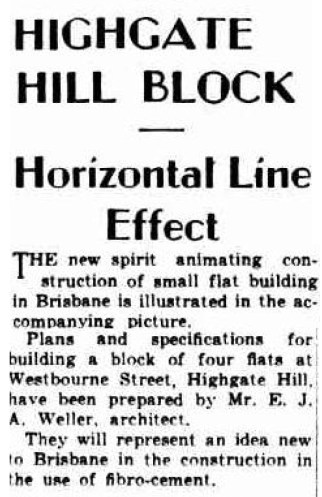
Fibre cement was invented by the Austrian Ludwig Hatschek late in the 19th century. However, in 1938, the use of fibro-cement in house construction was relatively new to Brisbane. It had been in use in Australia from around 1910. This article, for example describes the commencement of manufacture in Victoria in 1913.
The common availability of fibro-cement facilitated the introduction of domestic architectural styles differing from those common in the city, contrasting strongly with common traditional wood construction.
The architectural features of this house included a strong emphasis on horizontal lines, made possible by use of sheets of fibro-cement and a concealed roof.
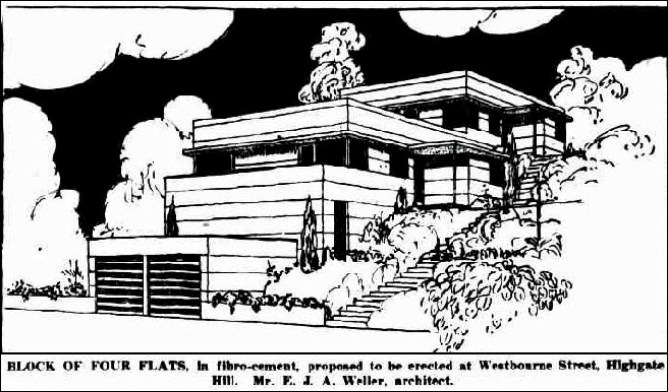
Courier-Mail (Brisbane) 20 September 1938 (TROVE)
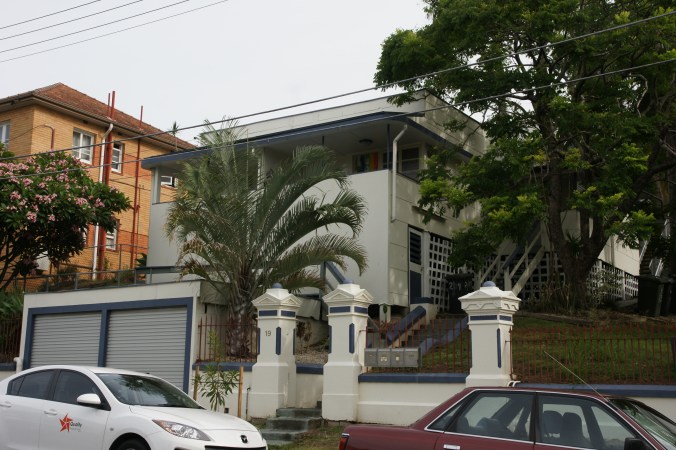
The flats in 2015
The imposing fence seen in the photograph belonged to the extensive property associated with the house known as “Tevenen” and later “Le Jardin”. I’ve written about this historic house in my post “Trevenen – the Life and Death of a Highgate Hill House”. The fence extends for around 150 metres down Westbourne Street.
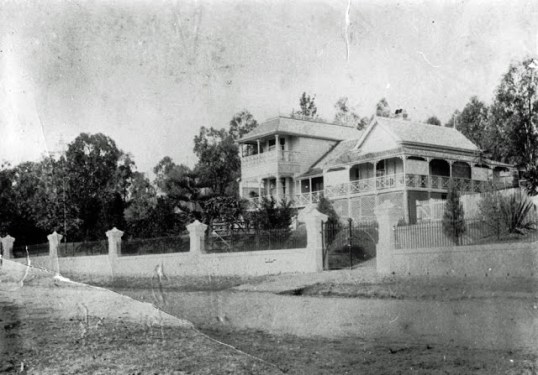
Trevenen/Le Jardin ca 1899 showing the imposing fence
The original property was broken up, as was that belonging to the house “Tarong”, mentioned in a previous post, A Strawberry Afternoon Tea Highgate Hill 1905. As a result of subsequent redevelopment, Westbourne Street has a row of 1930s and 40s buildings.
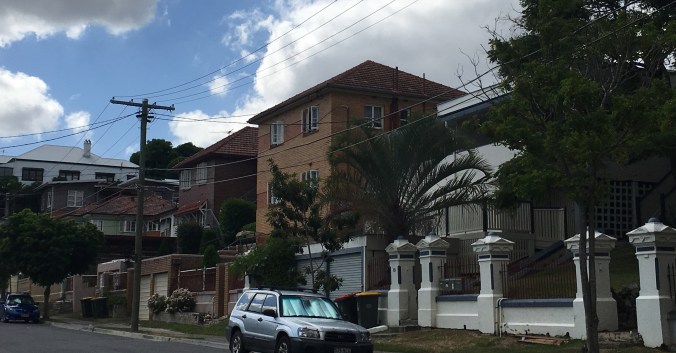
Westbourne Street in 2017
Another Westbourne Street development was featured in an article appearing in the Telegraph the following year.

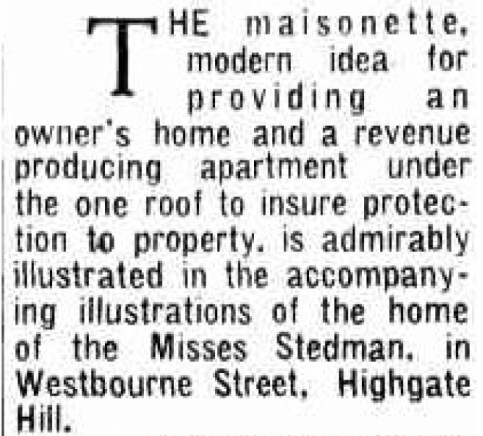
The Telegraph (Brisbane) 14 November 1939 (TROVE)
The article goes on to describe the design of the building.

The Telegraph (Brisbane) 14 November 1939 (Trove)
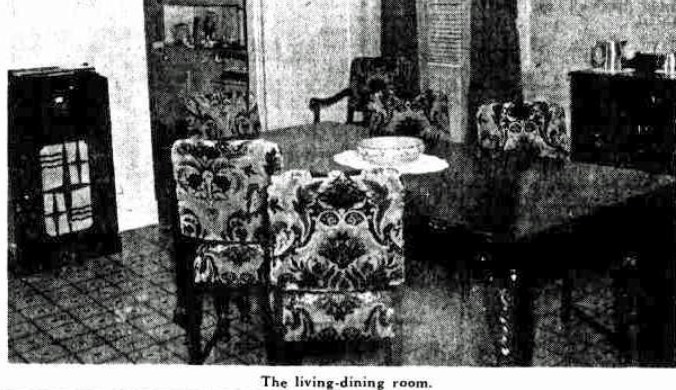
The floors were largely of kiln seasoned red stringy bark and the décor a neutral cream, reminiscent of common colour schemes today.
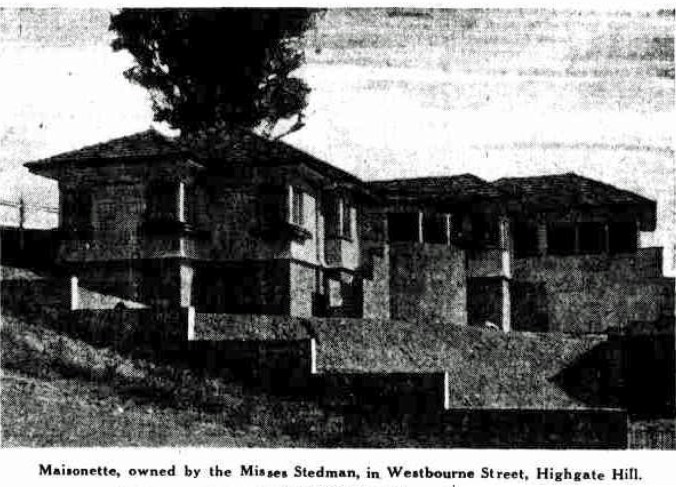
The owners’ section included five bed rooms, living-dining room, kitchen and bathroom and separate toilet whilst the flat section included two bedrooms.
This house is also still standing. Part of Le Jardin’s original fence mentioned above can been seen in the photo below.
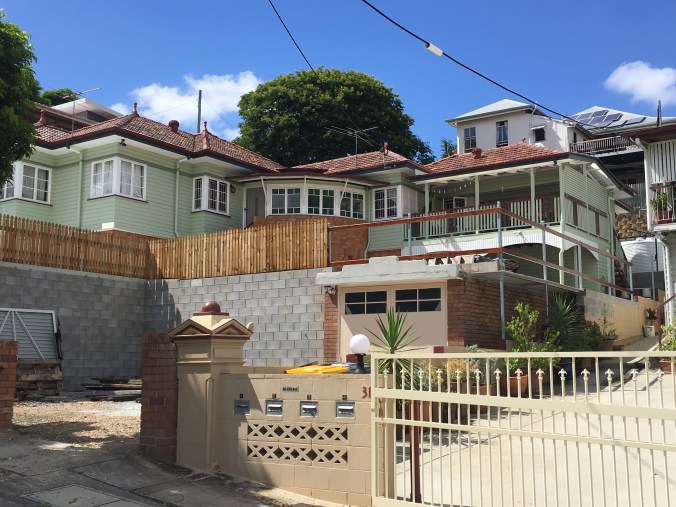
The Maisonette in 2017
FIBRO-CEMENT FLAT CONSTRUCTION (1938, September 20). The Courier-Mail (Brisbane, Qld. : 1933 – 1954), p. 8 (Second Section.). Retrieved February 6, 2017, from http://nla.gov.au/nla.news-article38721408
http://nla.gov.au/nla.news-page1983096
For BETTER HOMES (1939, November 14). The Telegraph (Brisbane, Qld. : 1872 – 1947), p. 14 (CITY FINAL LAST MINUTE NEWS). Retrieved February 6, 2017, from http://nla.gov.au/nla.news-article184390021


Pingback: A Strawberry Afternoon Tea Highgate Hill 1905 | Highgate Hill and Its History
Pingback: The Hazelwood Estate, Highgate Hill 1885 | Highgate Hill and Its History
Apparently the fence was heritage listed, but an application was made in 2014 to delist it. So a development application has been put in (as of 2024) to raze the two properties from 13 to 19 Westbourne St and put up a four storey (47 unit?) apartment complex.
LikeLike
I didn’t think 130 year old houses could be demolished?
LikeLike
Apparently it isn’t pristine original, has the workings of 4 different architects.
LikeLike
You could say that about most heritage listed houses. That’s the nature of things.
LikeLike