In Part 1 of my walk down Montague Road, I covered the early history of the road, and then worked my way down to the bend in near Davies Park. In part 2, I’ll continue down to the end of the road at Orleigh Park. Where I’ve published a detailed blog post, you can access it by using the “more on this topic” button.
Davies Park
Towards the end of the 19th century, with a rising local population, community agitation for more areas dedicated to sport and recreation was on the rise. By the late 1890s, one of the few large blocks of vacant land available for purchase in the area was a dairy paddock owned by local resident Philip Hardgrave. Philip and Margaret Hardgrave lived for many years in their house Arrawatta just south of the park.


Efforts by the South Brisbane Town Council to fund the purchase, championed by alderman and local chemist John Davies, were successful, and the land was acquired in 1900. In 1909, following a public petition, it was named Davies Park. Money loaned to buy the land was finally repaid in 1966.

The park soon became the centre of community sports, notably cricket and football, and from the 1930s, women’s baseball.
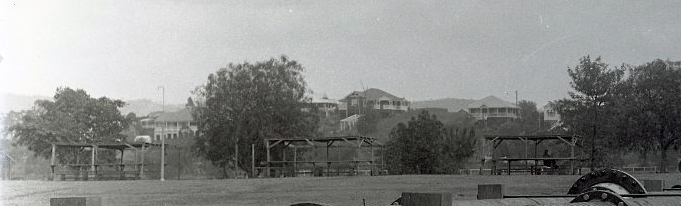
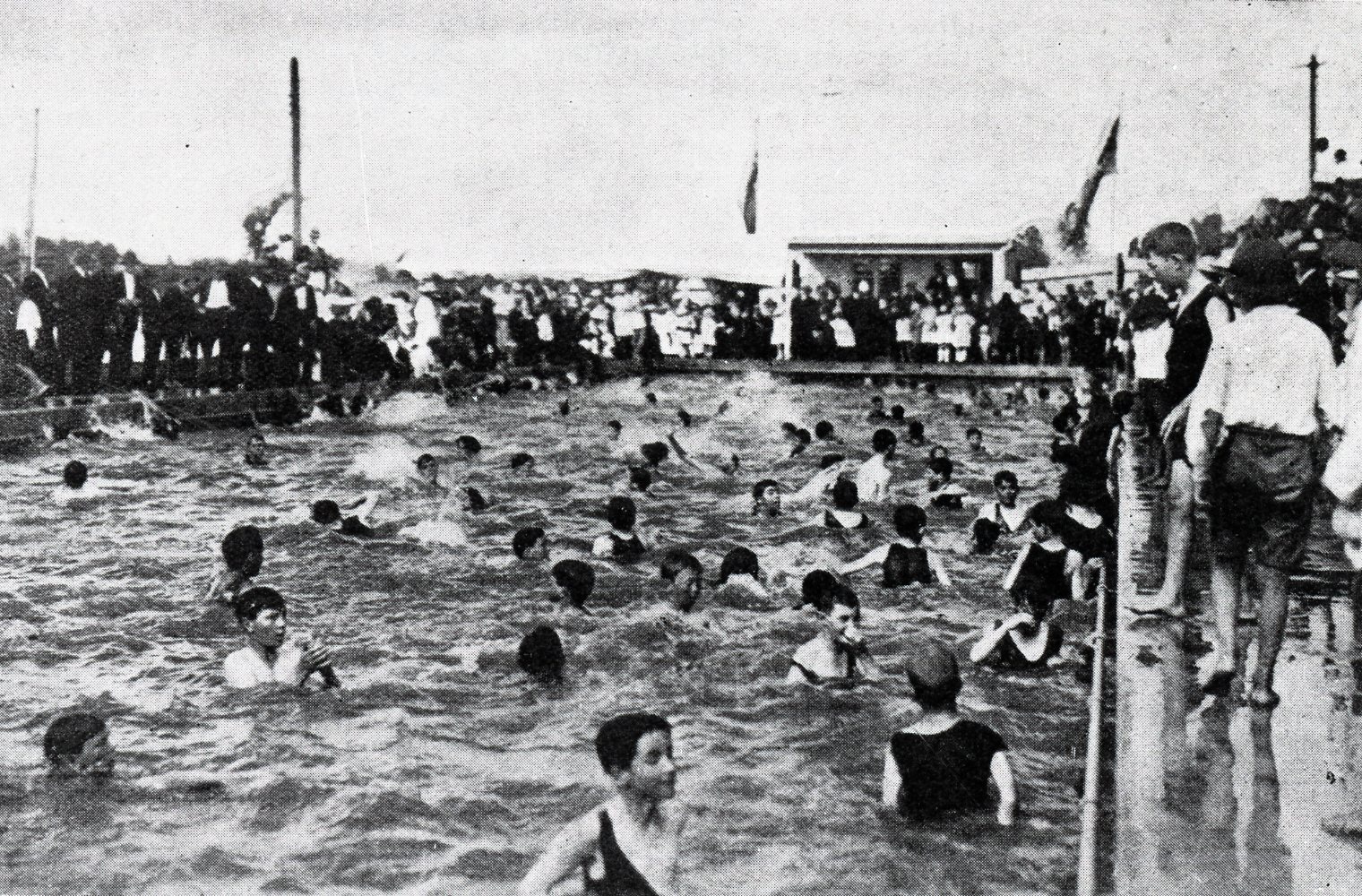
A further parcel of land was purchased by the South Brisbane Council, and a swimming pool was opened there at the end of 1921 with a carnival involving five district primary schools. Unusually, the pool bottom sloped downward from side to side rather than from end to end. It closed in 1967.

In the 1920s, a motorcycle craze led to the beginning of speedway racing. The entrepreneur A. J. Hunting sought Council permission to build a track at Davies Park. The major lessee of the park, the Rugby League, agreed and the track was built circling the football field.
The speedway opened on a chilly August evening in 1927, with 6,000 in attendance. As well as motorcycles, there were car and bicycle races. One rider lost control of his motorbike and it jumped the safety fence, knocking out a boy. One woman fainted and another received a blow to the hip. All recovered after ambulance attention.

With crowds of up to 13,000 attending on Wednesday and Saturday nights, a tram loop line was built in 1927, dropping patrons off at the gate in Montague Road. A ferry service also ran at times, calling at various points down the river. Neighbours weren’t impressed by the noise, described in one letter to the editor as an inferno of diabolical sounds, interspersed with the shrieks and yells of admirers of the contestants, which completely beggar description. By 1931, attendance was dropping and the speedway closed in 1932.
The depression years of the 1930s saw a homeless camp grow on the fringes of Davies Park. Despite attempts to close it following local residents’ complaints, the camp remained until the early 1940s. A common sight along the park riverbank was of hundreds of people lined up shoulder to shoulder, fishing for perch to feed their families.

Sport remained a major use of the park, along with community activities over the years as diverse as religious conventions, patriotic carnivals, square dancing, the South Brisbane Show, and a weekly market.
The South Brisbane Gas Works
The West End Gasworks were established in June 1885 to produce coal gas. At the time, Brisbane was in the middle of a land boom, and surrounding areas were rapidly being subdivided and sold creating a growing market. Supply of gas to customers commenced in December of 1886, and in early 1887, a pipe was laid across the Victoria Bridge to supply the northside.
Competition between the north and south side companies ensued, and in 1887 the North Brisbane Gas Company unexpectedly won a tender for street lamps in South Brisbane. This was a major market for the gas companies as street lighting was being progressively extended around Brisbane. By 1889, the two companies had agreed to suspend competition and only sell on their respective sides of the river. Shortly later, they synchronised their prices. These were regulated from 1916.

Along with most other homes and businesses along Montague Road, the gas works were badly damaged by the 1893 floods.


In 1969, the Roma to Brisbane natural gas pipeline was completed, and the old coal gas plant was retired late in that year. In 1971, the company name was changed to Allgas Energy Ltd. The buildings were demolished in 1974, although the gas holders remained in service until 1999. The gas stripping tower remains near the river bank.


Images of the plant buildings taken in 1974 before their demolition. (Richard Stringer, State Library of Queensland)
The Karilpa Estate
A little past here, the land on the left begins to rise to a ridge. In the 1860s, this was known as Emigrant’s Hill. The rapid increase in new arrivals due to incentives offered by the new Queensland Government led to an accommodation crisis. One of a number of tent communities around Brisbane was located on this ridge in the early 1860s.
In 1864, in what was one of the first residential developments in the area, part of the Herries family’s Karilpa Dairy Farm on the slopes between Harriet and Rogers Streets was subdivided in stages from 1864. Kurilpa, originally Karilpa, Street is the location of a further subdivision. This was possibly the first European use of the First Nations place name. On the river side of Montague Road, a long permanent swamp provided water for the adjacent farms and dairies. Dips still visible in the roads leading towards the river are traces of the swamp.

Raven’s West End Club
Nicholas Walpole Raven was born in around 1840 in Tasmania. He married Jane Robertson in 1869, and was later quoted as complaining that he never had a day’s happiness after being two months married. After spending time in North Queensland and Sydney, he settled with his family in Brisbane.
In 1884, Raven purchased over 3 acres of land on Montague Road between Rogers and Hill Street, which he had renamed Raven Street. There he built some houses for rental. Raven decided to establish a hotel on Montague Road, to be called the Musgrave Arms, after the then Governor, Anthony Musgrave. The closest pubs to Hill End were the Boundary, or the Regatta reached by the Toowong ferry.

After 3 unsuccessful attempts to obtain a licence, a further barrier was placed in his path in the form of the 1885 Licensing Act. This allowed for local polls of ratepayers to be held which could lead to the cessation of the approval of further licences. With a strong local temperance movement, in 1886 such a poll was successful in West End.

Despite this, Raven decided to build his hotel, most likely in the second half of 1889, and he moved in when the building was completed.

There was a legal stipulation that a new poll to reverse a decision could not be held until 2 years had passed, and Raven organised a further two polls in 1890 and 1892, both of which were unsuccessful. In the meantime, he rented the building to the Salvation Army. The enterprising Raven then registered the West End Club, which allowed him to sell alcohol at any time to those who had paid the one shilling annual membership fee.
In 1894 Raven, burdened with mortgages against his properties of almost £5,000, sold it all to Caleb Woodward, a graduate of Dublin University and a Toowoomba based surveyor. Wth Elizabeth Perry as his manager, Woodward continued running the West End Club. They were a little too greedy, and there were reports of children turning up with jugs to fill with beer for their parents at home. After a police sting operation in which Perry sold alcohol to non-members, the club was closed.

The temperance activists must have turned in their graves when the building became home to the Raven Hotel in 2022, after the passing of almost 140 years.
Winterbottom’s Omnibuses
In 1871, William and Anne Winterbottom decided to emigrate to Australia from Lancashire with their baby son Sam. There were outbreaks of measles, fever, and diarrhoea on board the immigrant ship Sultana and 17 passengers died. All but one were infants under 3 years old. Sam was lucky to survive.

In the 1870s, the family purchased 10 acres of land on the river from William Coombe. With a reliable source of fresh water from the adjacent Kurilpa Swamp, they established a market garden and dairy farm. Following the completion of the Victoria Bridge in 1874, the suburbs of South Brisbane grew steadily. In 1878, the Winterbottoms saw an opportunity to start an omnibus service and constructed stables on the site.


The Winterbottom family at their Montague Road stables (State Library of Queensland) and the location today (P. Granville).
The family ran various services to the city from West End and Highgate Hill. These included one which ran down Montague Road from South Brisbane, and another which passed down Boundary Street and then Granville Street to Montague Road. There was also a service that followed Vulture Street and then came back up Brighton Road via Sussex Street to a stand on the corner of Hampstead Road.

Sam and his brother James worked with their father and took over running the business as the Winterbottom Brothers on their father’s retirement. They later also ran services to Coorparoo and Carina with stables on Old Cleveland Road. The Winterbottom Brothers partnership was dissolved in 1900, and the property at Hill End was sold off in 1910 by the trustees of William’s estate. He had died some 19 years earlier.
The omnibus business was purchased by Henry Dean, who operated several lines around Brisbane. They were closed down ca. 1912 with the introduction of motorised buses. A service down Montague Road to Hill End was extended to Dornoch Terrace in 1925, and later became the council’s number 29 line. It continues today as the 192 bus.

Dixon’s boots
Thomas Dixon was born in 1845 at Bradford in Yorkshire, England, where he trained as a tanner. He migrated to Australia at the suggestion of his brother Joseph. His first establishment on Montague Road was a tannery built in the early 1870s. In 1878, he established a boot factory on Russell Street in South Brisbane.
Dixon relocated the boot factory to Hill End close to the family home Myora on Montague Road. At a little after one o’clock on a Friday morning in October of 1885, Elizabeth Dixon was awakened by her daughter crying, went to her bedroom, and saw the factory buildings on fire through the window. Nothing could be done to halt the spread of the fire, as the area was outside the range of reticulated water and five buildings were destroyed.

In the 1880s, with subdivision and rapid building of houses in the surrounding area, there were increasing complaints about the smell of the tannery. The next disaster was when the 1893 flood destroyed £1,500 worth of his stock and swept away the tannery shed at the rear of the property.

In 1907, needing more factory space, Dixon engaged well known architect Richard Gaily to design a new factory on land which Dixon had purchased diagonally across the street from the existing factory and tannery. The factory, opened in 1908, is today the home of Queensland Ballet.


Less than a year later, in 1909, there was yet another disastrous fire, this time in the two storey wooden factory built after the 1885 disaster. This blaze was thought to be caused by an employee dropping a match after lighting his pipe while leaving the factory at the end of the day. A new brick tannery building was built soon after, and it remains on the site today at number 439. Just 9 months later, Thomas Dixon died, aged 63. Elizabeth passed away 9 years later, in 1918.
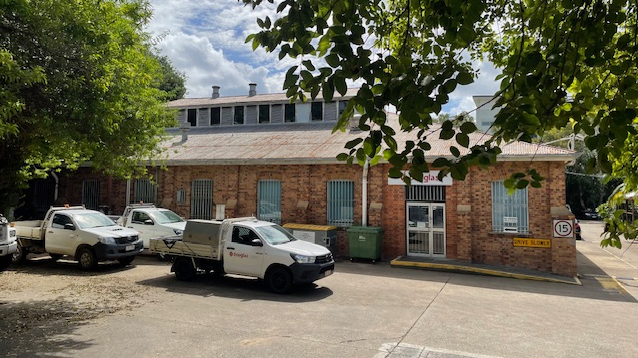

Despite all these tribulations, the company thrived for decades. In the 1970s, the tannery closed and the factory relocated to Wacol. Soon after, tariffs on imported shoes were reduced, making manufacturing uneconomic. By 1980, all 3 of the Wacol factories had closed.
Dixons were not alone in suffering fires on their premises. They occurred regularly in industrial buildings.


Orleigh Park
A little past this point we come across the remaining residential section of Montague Road that stretches down to the river. Land in this area was first sold by the NSW government in the 1850s. Two major landholders were John Perril Wilkie and William (Billy) Mortimer Coombe.
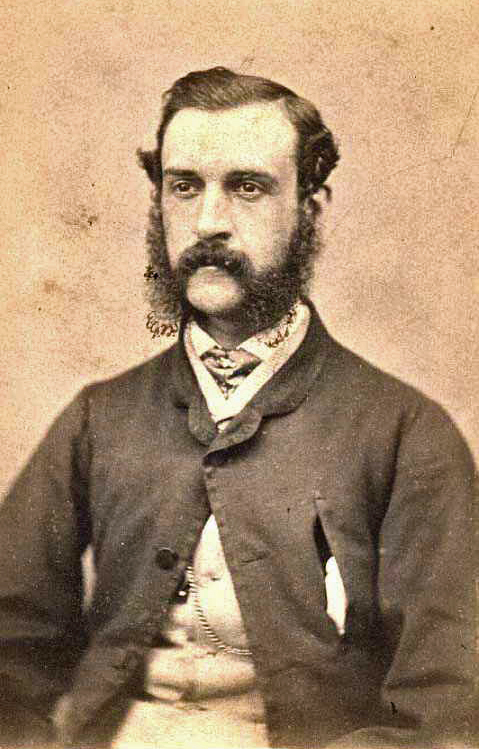
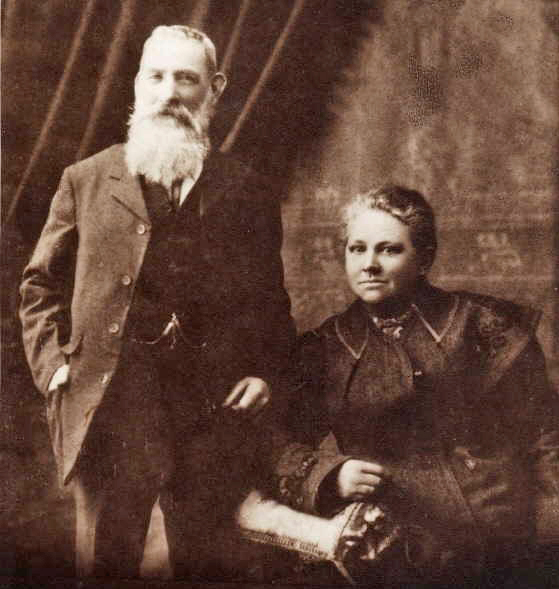

Wilke came from a privileged background and in 1844 he purchased the lease to the 80,000 acre Daandine property near Dalby, where he ran some 8,000 cattle and 400 horses. He moved to Brisbane in around 1853 to further the education of his sons at the Grammar School recently established by Thomas Mowbray, and purchased 55 acres of land here. Wilkie constructed a substantial homestead with 3 sitting rooms and 7 bedrooms that he named Hill End. This would give its name to the district, now part of West End.

Coombe was transported to Australia in 1836, having been convicted, along with several friends, of stealing 2 fat sheep. He obtained a ticket of leave in 1844 whilst at Muswellbrook. Coombe had a wife and 3 children at home, but he had been transported for life and reunion was impossible. He remarried in 1849 to Joannah Murphy and they had 6 children together. He purchased two blocks of farming land on the river in the 1840s.
Coombe’s Farm and part of Wilkie’s Hill End were purchased by Robert John Gray a few years after his marriage in 1870 to Mary Dorsey. The couple built their family home there, naming it Orleigh.
By the mid 1880s, all of the old Hill End and Coombe’s properties had been purchased by developers, subdivided, and sold as Hill End Estate and Orleigh Estate. On Saturday 4th February 1893, an estimated 30 houses were swept away from riverside blocks, complete with all their contents. Many were described as being particularly beautiful and costly residences. In many cases not even the stumps remained.

One of the houses that disappeared down the river was the Vernon family’s St Clements. Miraculously, a painting of the house that had hung on a wall was found along the river and returned to the family.
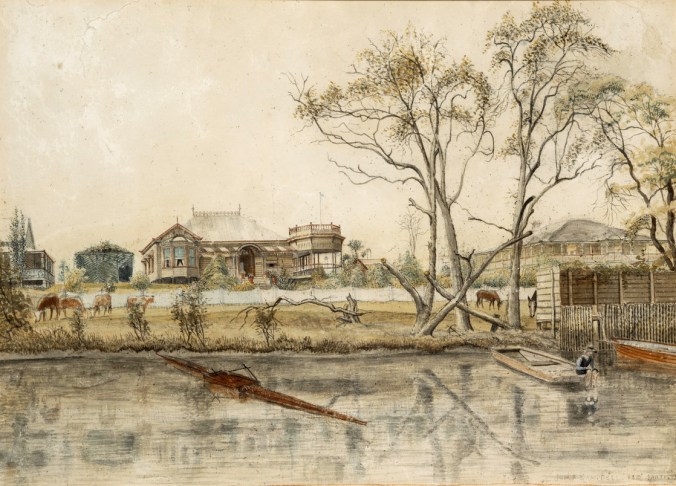
Following community lobbying, the South Brisbane City Council resumed riverside land in 1917 to create Orleigh Park.
This brings us again to the Brisbane River, where it makes a majestic sweep around a bend from Milton to Toowong Reach and ends our walk down Montague Road.
At the time of writing, Montague Road was once again in the news with changing State Government plans for the Visy Glass Factory site. It was purchased as the location of the Olympic Games international broadcast centre, which is now to be built elsewhere . High-density residential development is planned under a Provisional Priority Development Area approach, which would see the land sold. There is some community disquiet over this plan.
© P. Granville 2026


As usual, a great article. Thanks Paul for helping preserve the history of the area. Well done.
LikeLiked by 1 person
Thanks Brendan
LikeLiked by 1 person
Paul, another excellent piece of work.
Bill
Dr William J Metcalf
Adjunct Lecturer, Griffith University,
Honorary Associate Professor, University of Queensland,
Brisbane, Australia
LikeLiked by 2 people
Is there any further information on Henry Dean?
LikeLiked by 1 person
I found this obituary after a few minutes searching in Trove. I’m sure you could find much more. https://trove.nla.gov.au/newspaper/article/177355331
LikeLiked by 1 person
Very interesting – I lived near Orleigh Park in the early 2000s – isn’t it great when history is so alive in front of you?
LikeLiked by 1 person