The early days
A convict colony was established at Moreton Bay in 1824 and postal communications were a military affair. However, in 1833, 9 years before its opening to free European settlement, a Mr. Allman was appointed assistant postmaster. In 1842, Gilbert White became the first non-military postmaster.

South Brisbane began to be populated by Europeans, and calls for improved mail services soon began. A major complaint was the cost of crossing the river by ferry to the town’s only post office. Even when in 1860 a post box was installed and mail delivery began on the southside within the town boundary (see my post Vulture Street – From Dotted Line To Bitumen for more on this), complaints regarding delays continued. At a time when the mail was essential for business operation, delays in clearing the mailbox could result in a letter missing a sailing to Sydney.

One complaint in 1865 mentioned that a letter posted to a near neighbour at 10am was not delivered until the afternoon of the following day. As an experiment, I posted a letter from the city to our address at Highgate Hill. It was posted on a Monday at midday and was delivered on Wednesday.
Post Offices in Kurilpa
South Brisbane
Following lobbying that extended over some 30 years as well as population growth in South Brisbane, in 1876 an official post office was finally established in Stanley Street between Tribune and Sidon Street.
A few years later in 1882 a new post and telegraph office building was constructed across Stanley Street from the original office and near the dry dock. The first postmaster was Mrs. Marian Welch.

There were complaints about the new post office and often those wishing for their mail to leave on an advertised mail boat still needed to travel to the GPO to post their letter, as the mail from South Brisbane had been cleared hours before.
There was no lamp at night making it hard to find the post slot. Making matters worse, an 1885 letter to the editor mentioned that
“Of late this place has been the rendezvous of a number of larrikins who are to be seen until late in the evening, squatting around the veranda, smoking and spitting and using language of the worst possible kind. Indeed, it is not a wise proceeding for a respectable person to pass within earshot of the place, so vile is the language made use of. “

Following the construction in 1884 of a railway line to South Brisbane (see my post Gloucester Street Railway Station), the situation improved, and by 1886 mail was being sent by train directly from South Brisbane to the travelling post office at Oxley railway station for overland transport to Sydney.

In 1889, the Queensland Post and Telegraph Department decided that the post office location was no longer satisfactory and decided to replace it with two new offices at Woolloongabba and on Melbourne Street in South Brisbane.
Some questioned this change as the location was becoming more important, with the new South Brisbane Town Hall planned to be built nearby. There was a divergence of opinion as to where the new South Brisbane post office should be located, but it opened in 1890 on the north-east corner of Melbourne and Grey Streets, where it was to remain until 1911.
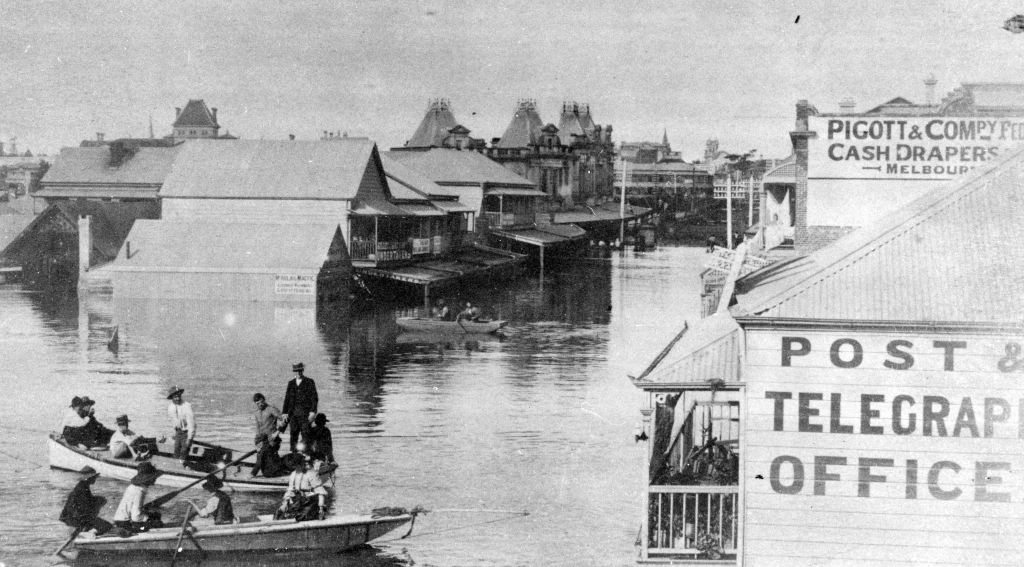
The old post office became a public library and later there were two extensions to the building which operated as a School of Arts and Concert Hall. The library continued to function until 1973 and after being abandoned for some years, the buildings became home to the Griffith University Film School.


The South Brisbane Post Office moved yet again in 1911 to a rented premises at 161 Stanley Street, between Russell and Glenelg Streets. This was a small shop described as “little more than a box and ill-lighted”.
By this time, the various colonial post and telegraph departments had been merged to form the Commonwealth Postmaster General’s Department. There were regular calls for better facilities for decades, but it wasn’t until 1950 that a new purpose-built facility was inaugurated.


This building was demolished as part of the preparations for World Expo 88. There is currently no post office at South Brisbane.

West End
The 1878 Postal Directory mentions a West End Post Office in Vulture Street. A correspondent to the Telegraph newspaper in 1885 commented that
“There is a place in Vulture Street called the West End Post Office; but as the whole affair appears to be mixed up with butter, bacon, sugar, soup &c, few care to have any truck with it.”
As mail was only forwarded to the GPO once a day, business users continued to catch an omnibus (see my post Brisbane’s Omnibuses) into the city to post their mail to avoid a day’s delay in delivery.

In 1911, Annie Barry was appointed post mistress, and her house in Vulture Street, near the corner of Thomas Street, was modified to serve its new role. The West End Post Office made the news in 1919 when a robber took a bundle of 49 £1 notes from the cash drawer while Annie was in the phone cabinet answering a call. Despite the accused being found to have a roll of bank notes when he was arrested, he was discharged by the magistrate.
In around 1920, the post office was relocated to a rented shop in Pearson’s Building at 169 Boundary Street. The post office shared the building with a “dealer”, tea rooms, a Japanese laundry and a butcher.

Popular and well respected Annie Barry remained the post mistress until 1923 when, after 13 years, she was forced to resign due to ill health. By 1930, the post office had moved up Boundary Street to number 138 where it remained until 1941 when a purpose-built building was opened at number 153.
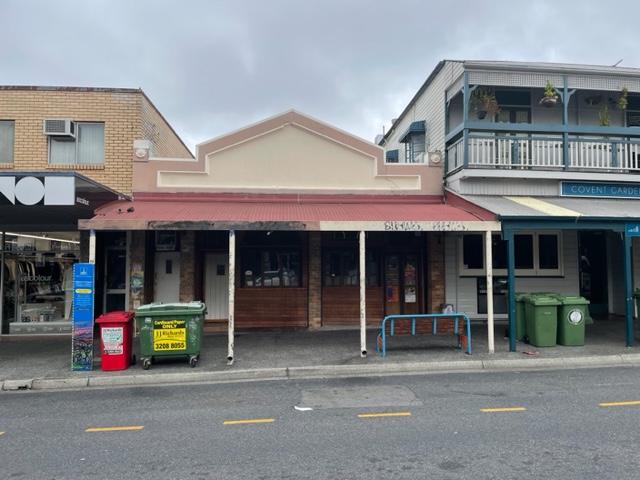


In around 1990, the West End Post Office moved from Boundary Street to its current location on Russell Street. Today, it’s often the scene of long queues of people collecting the parcel delivery they missed at home.

Kurilpa
An “unofficial” Kurilpa post office was established at the corner of Dornoch Terrace and Hardgrave Road in 1936. In 1950, it moved around the corner to 13 Dornoch Terrace but at some time moved back to the old location at 170a Hardgrave Road. It was closed by 1980.
The postal service
West End and Highgate Hill grew rapidly in the land boom of the 1880s. Whilst there were mail deliveries twice a day in South Brisbane, there was only one postman for the rest of the Kurilpa area.
One correspondent to the Telegraph is 1895 complained that
“there is only one letter carrier allotted to Hill End, West End, and Highgate Hill. He may be seen shortly after 9 am near the Montague road Sawmill. He then has to traverse Norfolk road, Upper Melbourne street, Jane street, Vulture street West, Hardgrave road, and the scores of streets teeming with population from the portly councillor to the horny-handed labourer — so that it is nearly noon before this overworked official has finished the Hill End portion of his district and commences at West End.“

Deliveries twice a day, including on Saturday, were later introduced although on one Saturday a year the postal workers’ picnic was held and there was only one delivery. Multiole deliveries were important as mail was used for almost all the communications which today have been supplanted by telephone, texting, email, and online messaging. Telegrams were available but their cost put them outside of the reach of private individuals for decades.
Finding the address
In the early days of South Brisbane, letters were often addressed in a very simple manner, such as “John Smith, Moreton Bay” and at times the actual location of the addressee was unknown. Unclaimed letters were returned to Sydney after 30 days, creating great inconvenience.
The more closely settled areas of South Brisbane along the river did have streets that had been named after British aristocratic politicians by bureaucrats in Sydney (see my post Early South Brisbane Street Names and the Montague Mystery). However street signs were rare and house numbering was not yet in use, thus requiring the postman to have local knowledge or make enquiries when necessary. Those living in rural areas, such as the future West End, commonly gave their farms names which could be used in addressing mail.
Developers commonly gave names to streets, however street signs were rare and some streets remained unnamed for years.

Post Office Directories
Queensland Post Office Directories were published by private firms from 1874. These listed each street with the name of the residents given in the order of the houses along the street. Many houses, but not all, were given names by their owners and these were used in addressing mail. House names appeared in some editions of Post Office Directories.

Directories were of great use, and were eventually published yearly. However, initially they were published irregularly and information got out of date. Also, long term residents of boarding houses were only occasionally listed.
Street numbering
Whilst major city streets were numbered in the 1880s, it wasn’t until about 1920 that street numbers began to be allocated on the southside. This was initially limited to major thoroughfares such as Melbourne, Vulture and Stanley Streets. The Council had house number plates manufactured and at various times either sold them for a shilling or gave them to householders. Private companies were not allowed to put up number plates, as these were often based on an incorrect guess.
Finally, by 1936 most houses in the Kurilpa area had been allocated street numbers.


For more on the history of Norfolk Road that I’ve used as an example in this post, see “A Walk Down Norfolk Road“.
The council purchased thousands of house number plates from 1928 until the early 1950s. Some were of cast aluminium painted black and white whilst others were of pressed nickel alloy with a black or white enamelled face. Many can still be seen across West End and Highgate Hill.


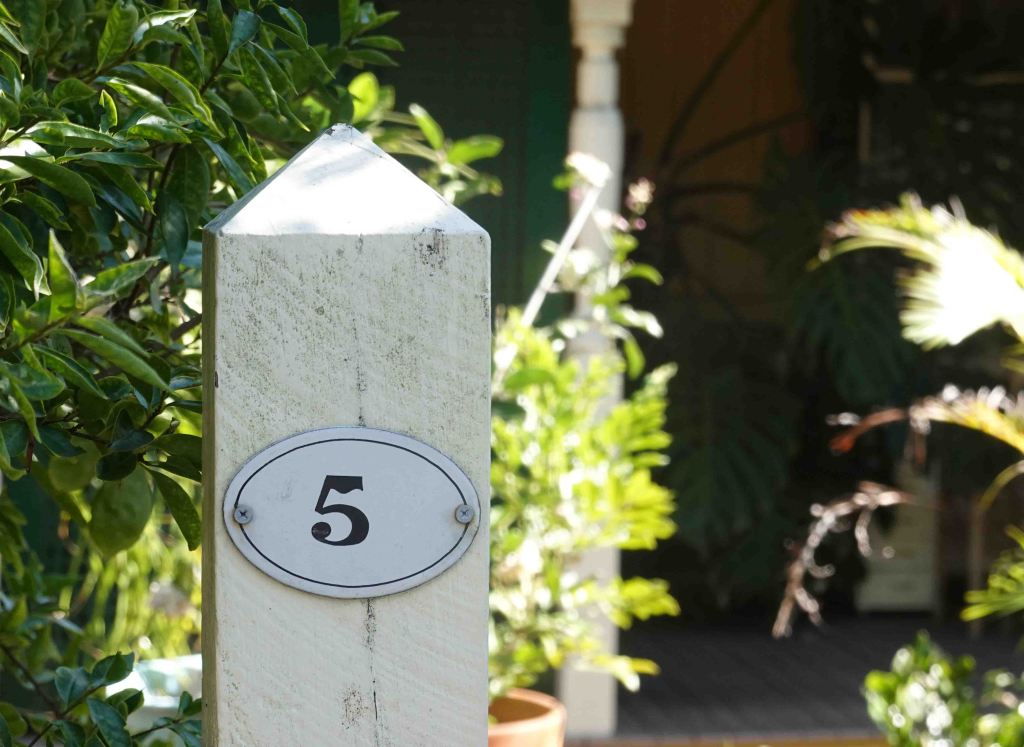


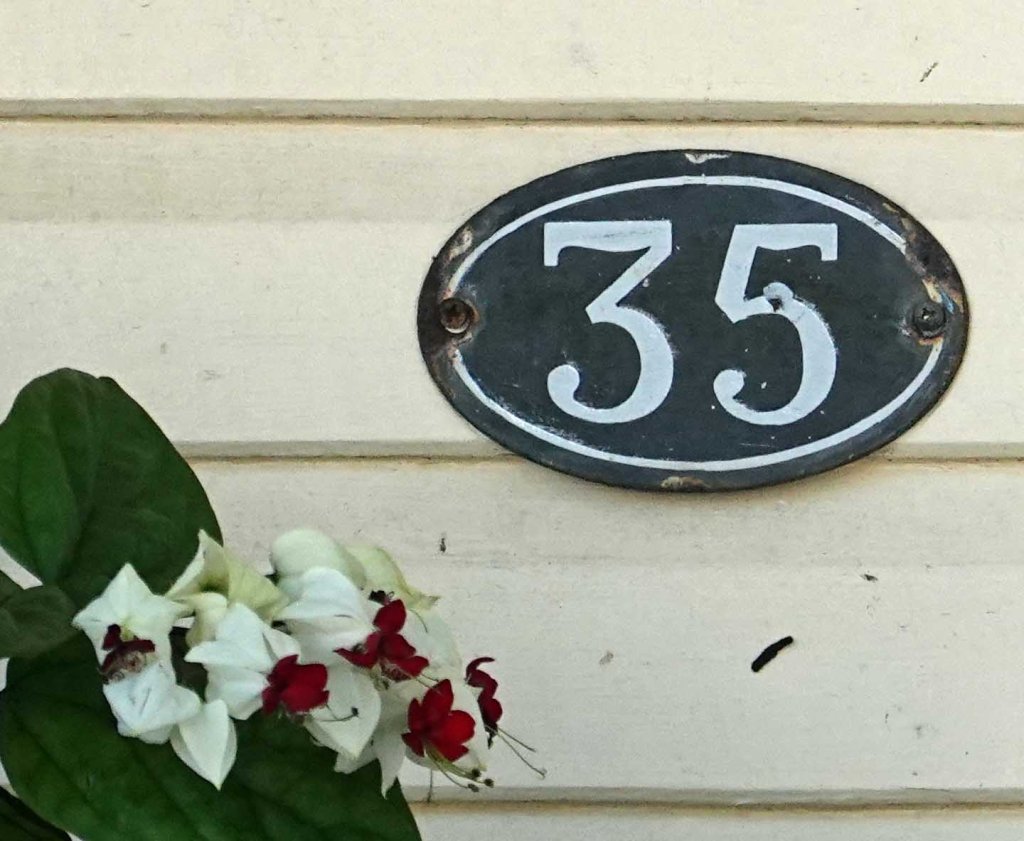

Problems with delivering mail in Brisbane had reached such a level that in 1934, the Postmaster General’s Department State Director, Mr. Corbett, began lobbying publicly for improvement. The issues for mail delivery included not only the lack of house numbering, but also the widespread absence of street signs and duplication in street names.
In 1936, he was still lobbying for change, and a journalist summarised one of the issues with Brisbane street names in an article entitled “Why Postmen Get Angry“.
“Other Christian names, Including those of the most celebrated of the Twelve Apostles, abound in both profusion and confusion, and the problem which confronts the postman in locating Mr. John Smith, John Street, Brisbane, can be imagined.”
Towards a solution
In 1938, the Brisbane City Council and the Postmaster General’s Department agreed to address the poor situation in Brisbane. The numbering of houses would be compulsory, duplicated street names would be eliminated, and all streets would be provided with name signs. The Council attempted to introduce an ordinance requiring all house owners to purchase number plates, however this was rejected by the State Government.
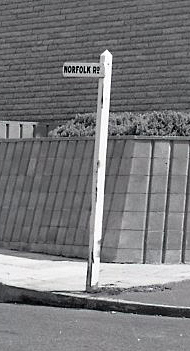

Things continued to progress slowly, and during World War 2, American soldiers complained of not being able to find homes they had been invited to. The Courier-Mail commented that
“Americans do not have this problem on their own. Brisbane people not only cannot find other Brisbane people’s homes, but if it depended upon numbering — they would not be able to find their own.”

Rationalisation of street names
Whilst the spread of street signs and house numbers continued at a slow pace, there was action taken to reduce the multiple use of street names. In 1938, for example, all but one of the 16 Church Streets in Brisbane were renamed. West End’s Church Street originally took its title from the Primitive Methodist Church that was located there (see my post Nicholas Walpole Raven and the West End Pub with No Beer) and was renamed Ambleside Street, whilst adjacent Church Lane became Amersham Street.

Some other examples of the 1938 changes in West End included Alice Street, one of 17 in Brisbane, to Egbert Street, George to Cordeaux, Mary to Daventry and Queen to Carlow. In Highgate Hill, Maud Street became Audenshaw Street, and Rose became Ampthill.
The British postal district naming system was introduced and Kurilpa was in district S1.
Postmen
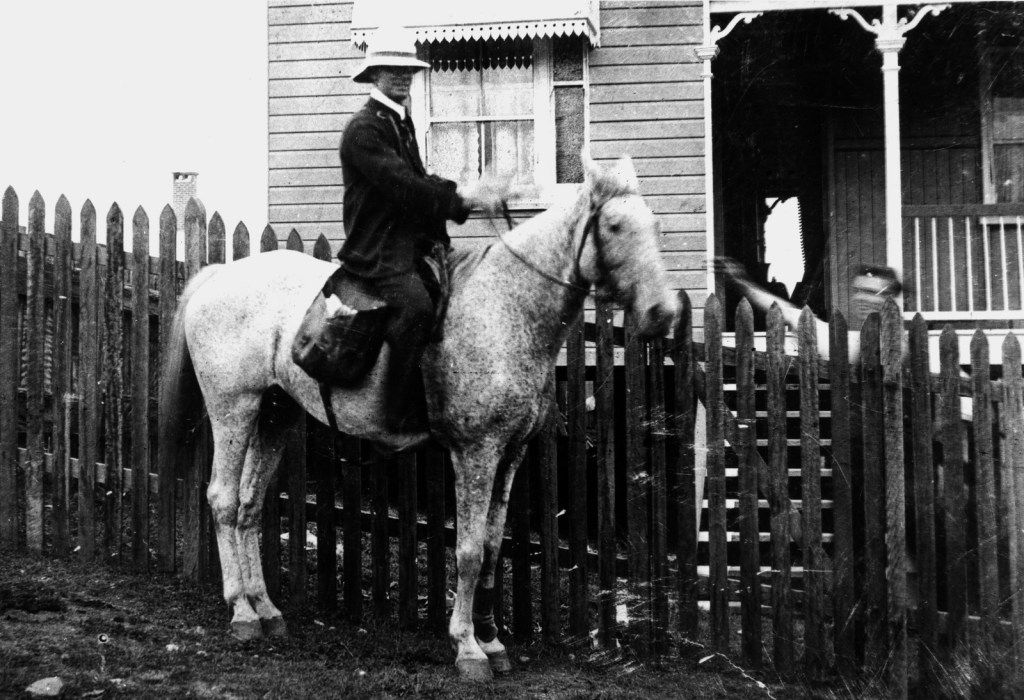
From time to time local postmen made the news. In January 1898, an unnamed individual was seen delivering mail on horseback in South Brisbane after heavy rain. He was making his way down backstreets through water that was almost swimmable. The article comments that “he would doubtless find a good many people out“.
South Brisbane senior postman Fred Goode made the news in 1952 when he retired. The Postmaster General’s Department determined that he had broken all previous national records for the distance walked by a postman.
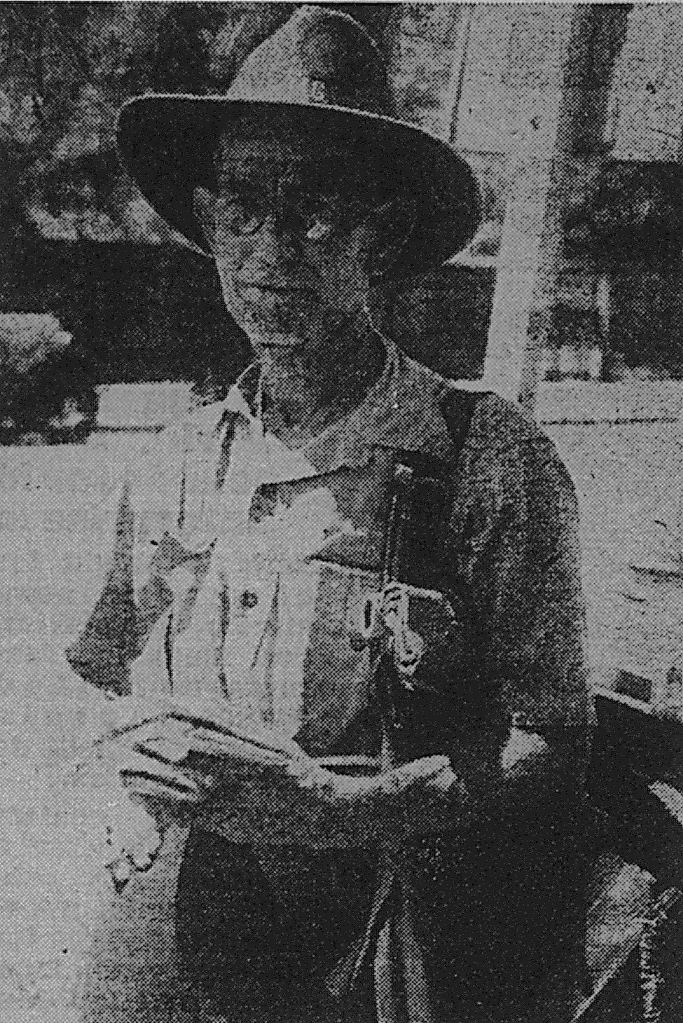
With 50 years of service starting when he was 14 years of age, including the last 28 years at South Brisbane, it was estimated that he had walked half a million miles, or around 800,000 kilometres, delivering the mail. Fred commented that he often took a long walk as a “constitutional” after finishing his 25 mile (40 kilometres) delivery.
Another South Brisbane postie who became well known at the time was Len Randall who a wrote a number of plays which are still occasionally performed.

Methods of postal delivery have evolved over the years from foot, horse and bicycle, to the famous post office motorbike from the 1970s, and the recently introduced electric buggy.


We no longer rely on the mail for almost all our communications, as was the case in days gone by when the postman’s whistle was heard three times a day in the CBD and twice a day in most suburbs. Today, handwritten letters are almost a thing of the past, but parcel deliveries continue to increase.
With a rapid decline in letter volume, daily delivery of mail may soon cease.

© P. Granville 2023
 Highgate Hill and Its History
Very interesting – my Grandparents lived in Belvue Terrace , Mt Gravatt. The street name was changed to Grenfell Street because there were other Belvue Terrace in Brisbane.
LikeLike
Dear Paul,
This is Lorraine Stitt my mother in law was Winnie Kelly daughter of Richard James Kelly, Highgate hill big house.
If possible could we view this house on a Tuesday? If not possible I will understand.
Lorraine Stitt
>
LikeLike
Hi Lorraine
Did you receive the email I sent you in April of last year ? I mentioned that I don’t own the house or live there. I copied in the owner of the house so you could contact her. Let me know if you can’t find the email and I’ll resend it. Paul
LikeLike