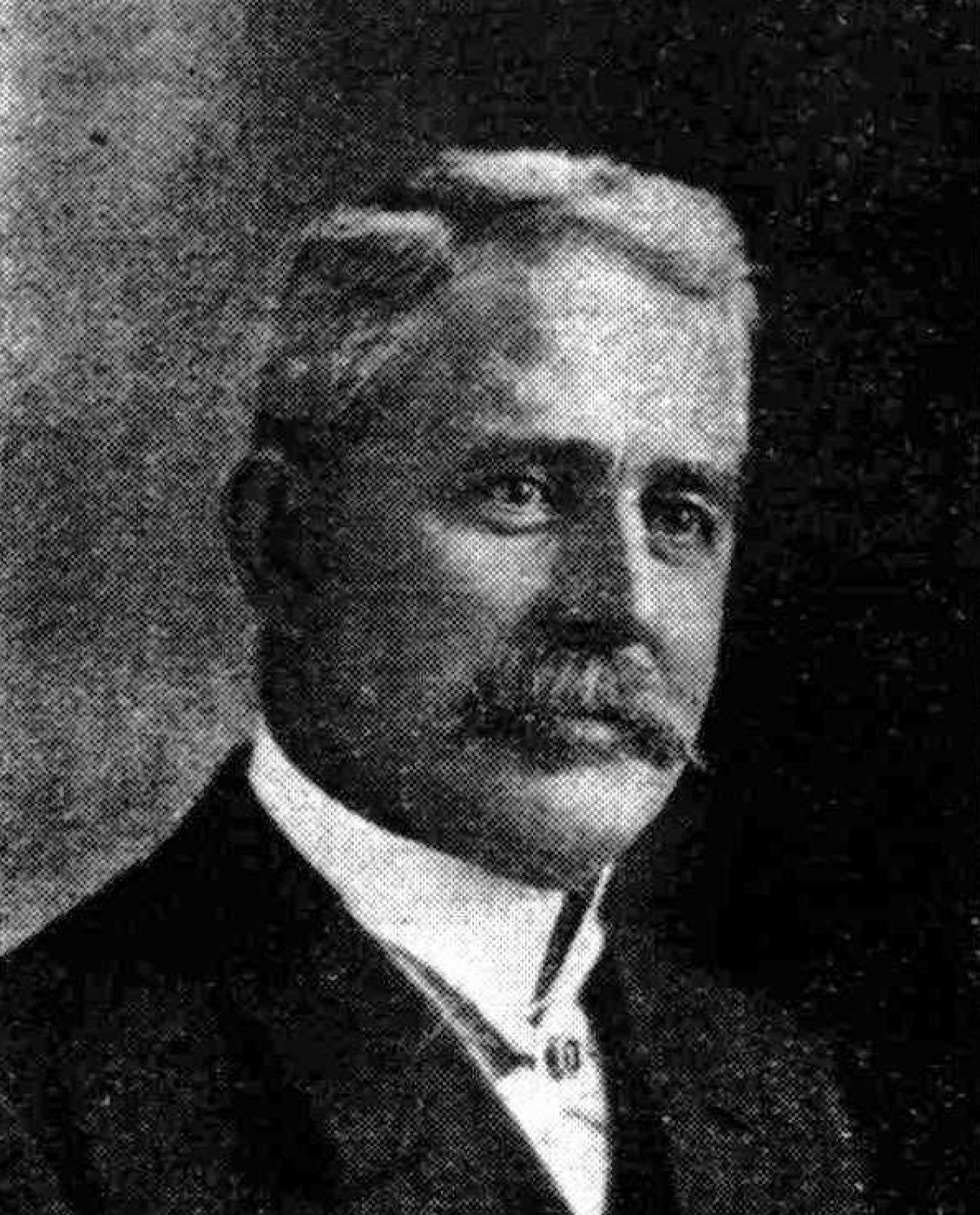
Emile Gaujard
In 1880, the Frenchman Emile Gaujard purchased a block of residential land towards the top of Franklin street, Highgate Hill. He was from Orleans and had travelled to the gold fields of Victoria in 1853 where he worked as a merchant. Emile with his wife Sarah and daughter Helene arrived in Brisbane in 1864. He ran various tobacconist businesses and for some time was in a partnership with James Elson in a combined tobacconist and hairdressing business called “The Divan”.
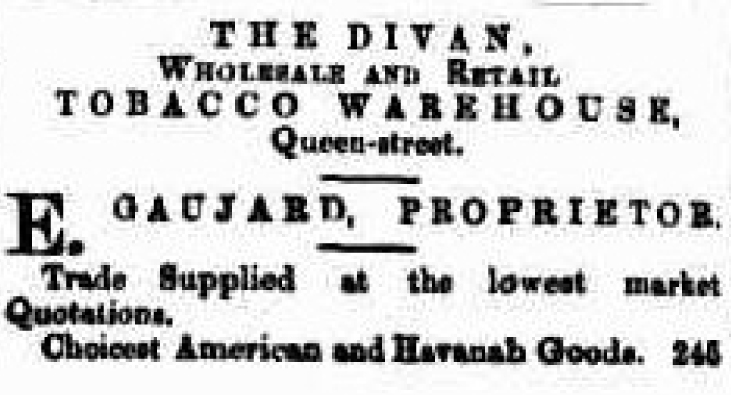
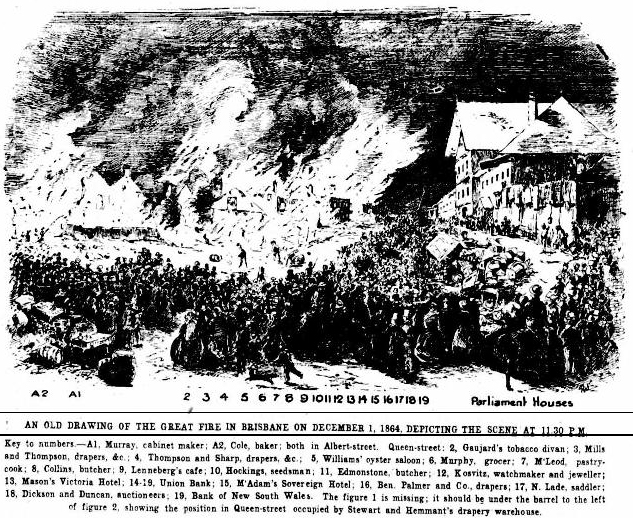
He had an early setback when his Queen Street premises was destroyed in the great fire of 1864 but much of his stock was saved thanks to ready helpers. He was insured and soon back in business. The shop was located at number 58, near the corner of George Street.

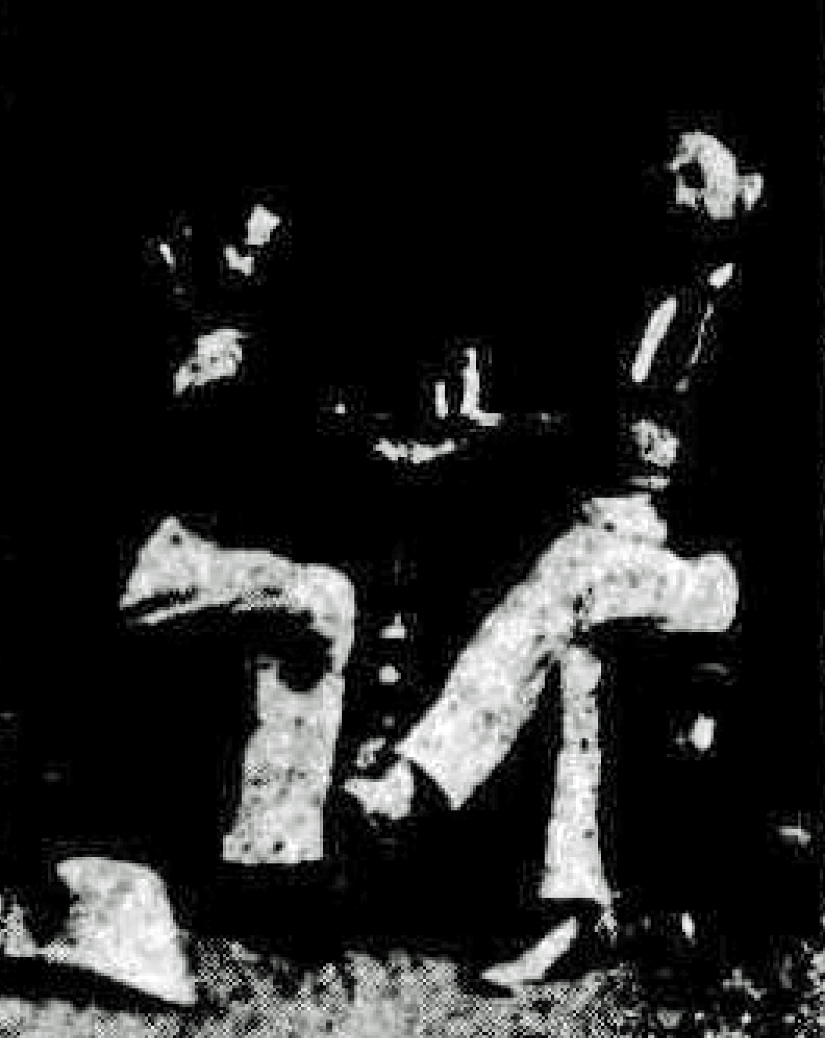
The Divan was a place where men gathered to smoke but also converse and play chess and draughts. In the unfortunately indistinct photo below from 1874, Emile Gaujard is on the left paying chess with Charley Abraham who took over the business from Emile.
Emile also invested in real estate and one of his last projects was Brighton Terrace in Sussex Street, adjacent to Franklin Street. He built this in 1889 as a rental investment. The building has survived and is on the State Heritage Register.
The Bruce-Nicolls and “Marly”
Emile’s wife Sarah (nee Curtis) passed away in 1879, leaving him with his 22 year old daughter Helene as his only family. In 1884, Helene married George Bruce-Nicol who she had met when they were neighbours living in Grey Street, South Brisbane. Born in Glasgow, he had worked for some years with the British – India mail service and after many trips to Brisbane, decided to settle here.
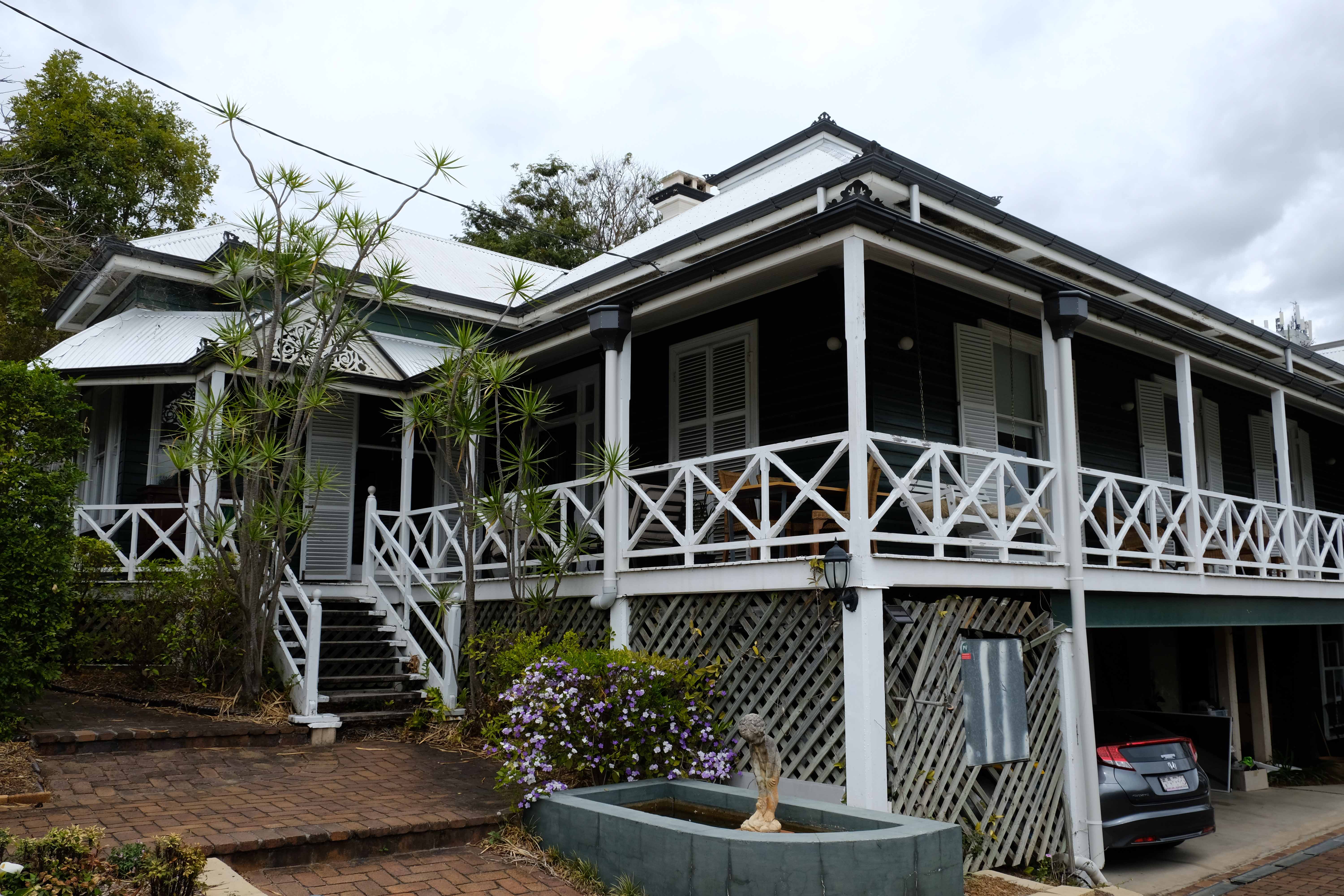
In around 1888 they built the charming house “Marly” on the land that Emile had purchased in Franklin Street. The couple had two sons and 3 daughters between 1884 and 1891. Sadly the last daughter, Essie Evelyn, died in her first year.
Emile lived with the family for some time before his death in 1890.
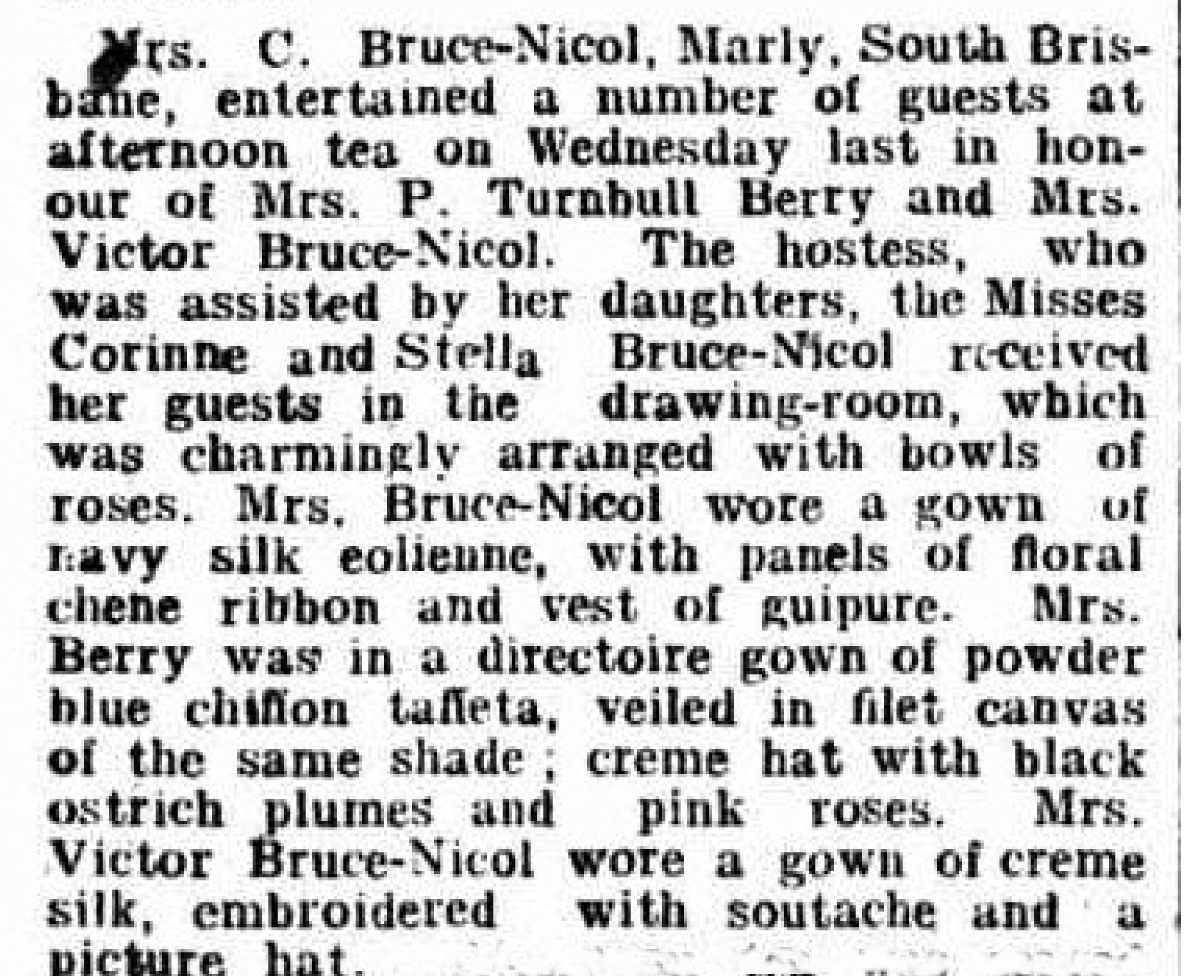
An idea of Brisbane’s Edwardian society can be gained from this clipping from the social pages of the Telegraph newspaper.

The girls were, of course, both debutantes.
The West End Brewery
In 1886 George, in partnership with a brewer called Charles Lanfear, established the West End Brewery.
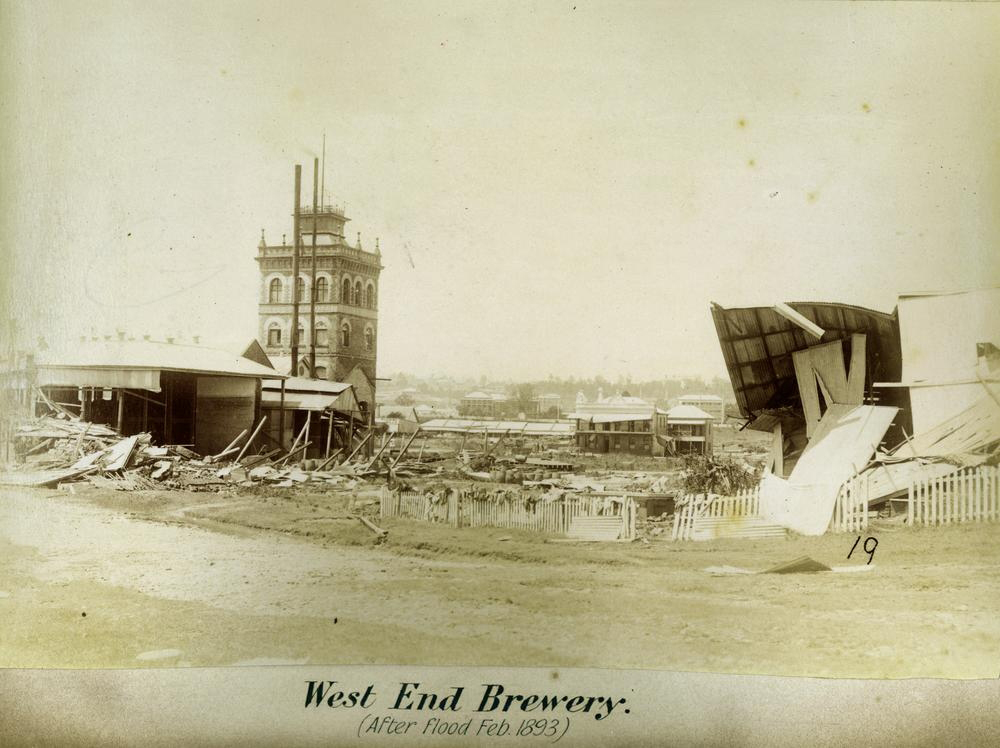
Despite its name, the brewery was located in South Brisbane in Montague Road between Merivale and Cordelia Streets. The imposing building was a prominent landmark for many years. Being located on low ground next to the river, the brewery was badly damaged in the 1893 floods.
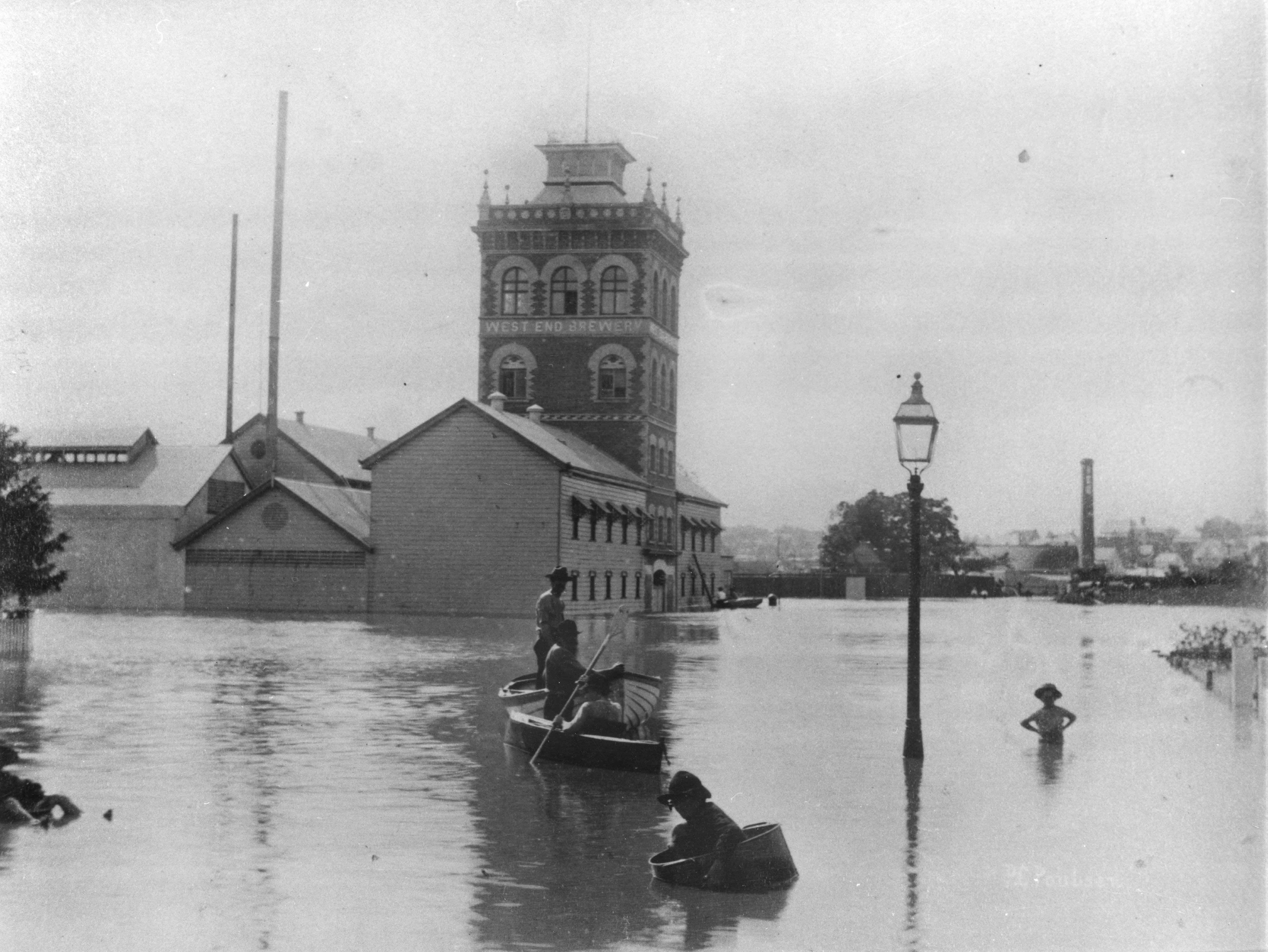
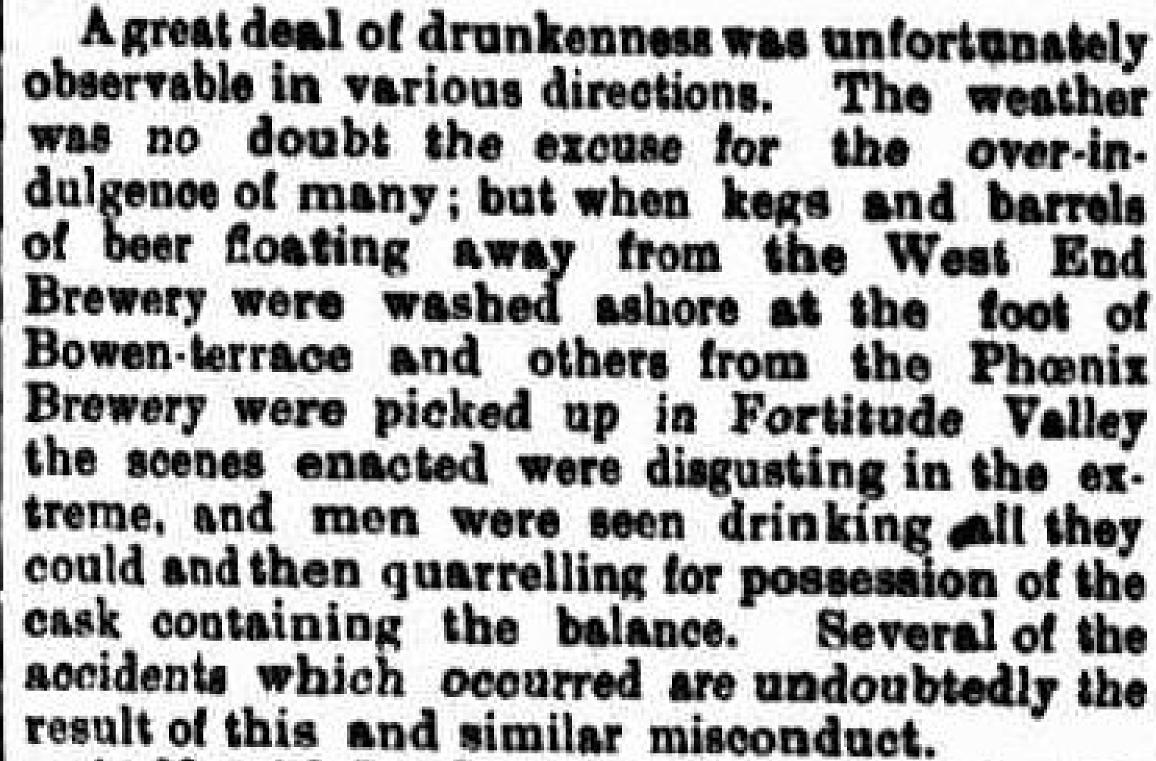
The flood carried away some 500 barrels of beer, much to the delight of those living near the river.
The brewery tower survived, and new buildings were erected in a matching style.

In 1895 the quality of the beer dropped drastically for some months and sales plummeted. Some months later the brewer Lanfear, who was held responsible, was sacked. He later unsuccessfully tried to sue the company for libel and unfair dismissal.
The business recovered after some years and in 1906 was still prosperous and paying 10% dividends. In 1908, the company purchased an adjacent acre of land to establish a brewery to produce lager.
George Bruce-Nicol remained as chairman and managing director of the brewery right through until 1914 at which time it seems to have ceased trading. Bruce-Nicol died a few years later in 1917.
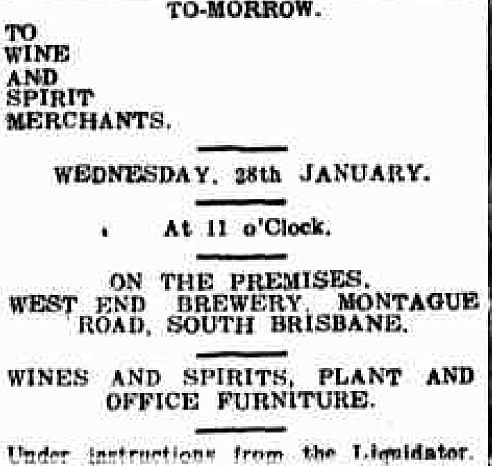
From a study of Post Office Directories, it seems that the brewery building remained empty for many years. In the 1920s, Evans Deakin Pty. Ltd. established a workshop on the other side of Montague Road. The company purchased the old Brewery buildings around 1945 as their need for space increased. They were still standing in 1953 when the chimney was demolished to make way for a new workshop.
By the early 1960s, only a section remained, with an original brewery wall being incorporated into a new Evans Deakin workshop building.

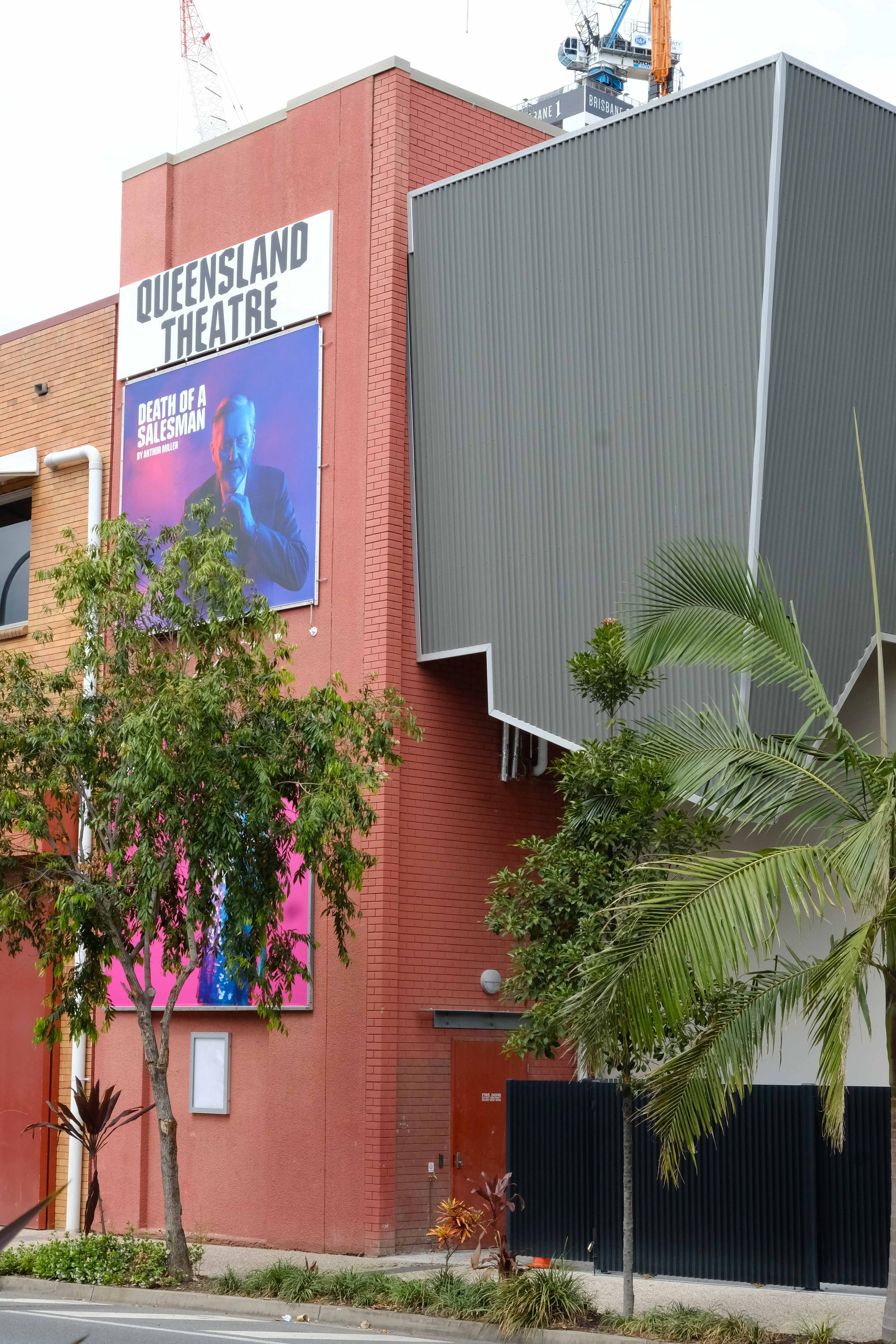
Here’s a Google Earth screen shot of the same spot today. Some of the Evans Deakin buildings remain, now used by the Queensland Theater Company. An “L” shaped end wall of the brewery which was incorporated into one of these remains there today.

The remaining brewery buildings were demolished, probably in the 1960s.

A small section of the remaining brewery brickwork is visible from Cordelia Street.
Helene and Stella
After George’s death in 1917, Helene, along with her daughters Corinne and Stella, moved to New Farm.
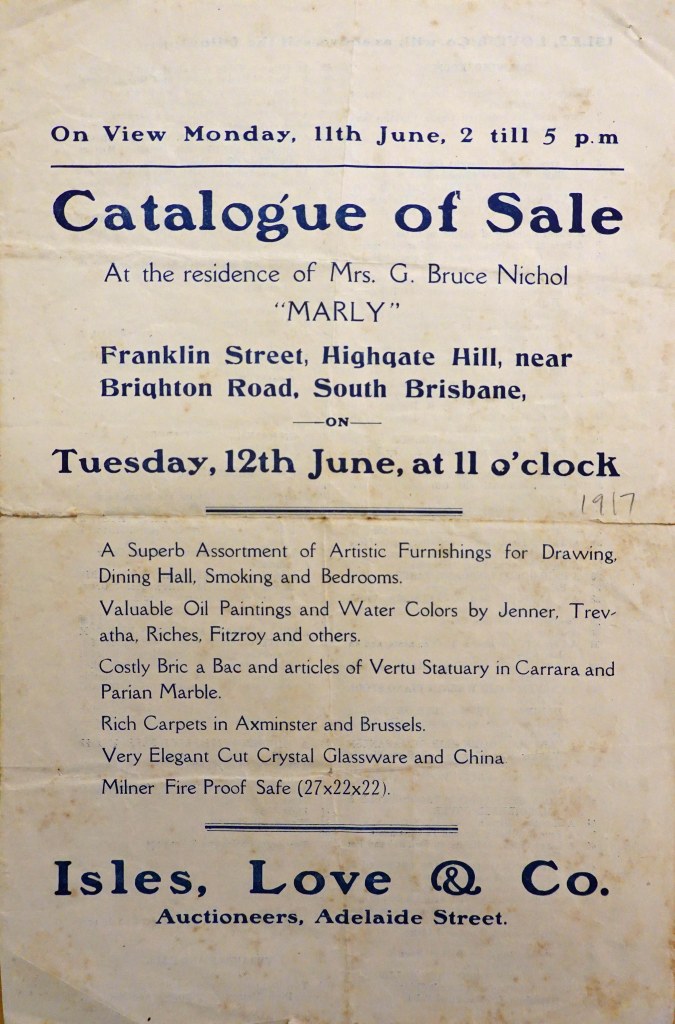
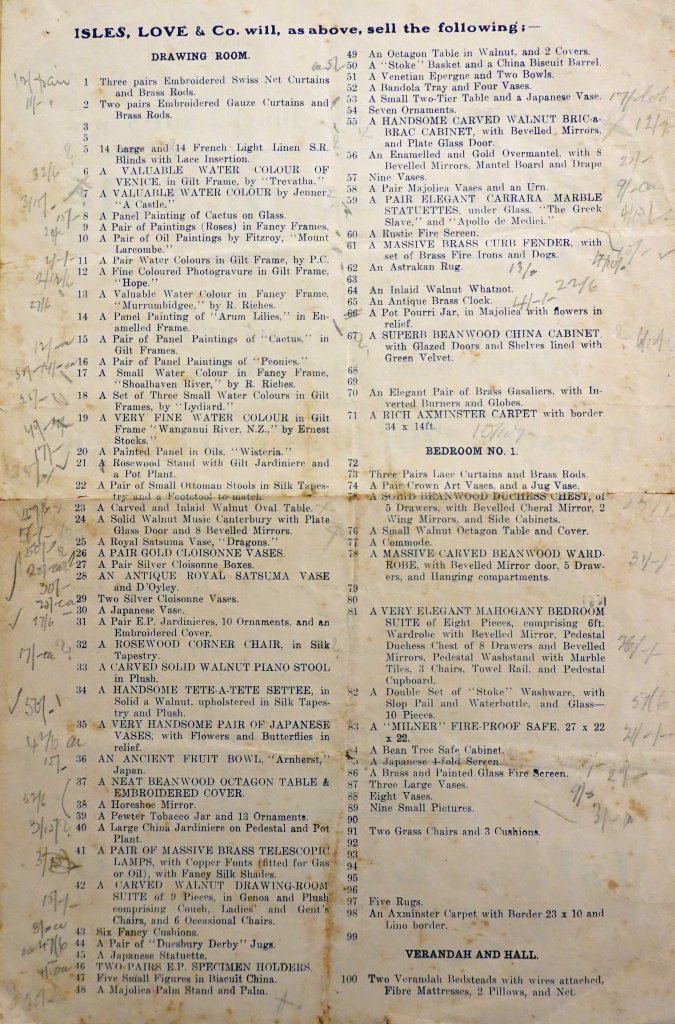
She sold the Franklin Street house ‘Marly’ to the Anglican Church who used it as a maternity hospital. It was called the Sumner Hospital in honour of the founder of the Mothers Union, Mary Sumner. The Church eventually sold the property in 1938, subdividing the land in the process.
Helene was well known in Brisbane as a philanthropist. During the First World War, she and her daughters were heavily involved with the Red Cross and established a local French Red Cross fund.
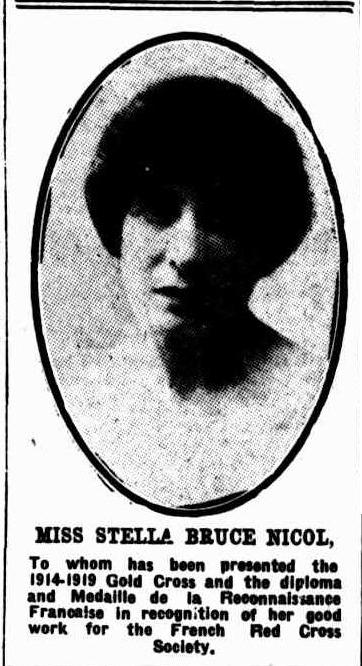
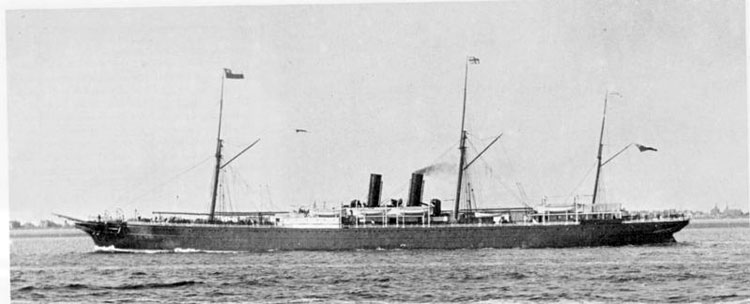
According to one obituary, Helene had studied art and music in France. There’s certainly a record of her travelling to Europe with her father Emile and returning 8 months later on board the Orient Line ship “Potosi” in 1882.
Helene used her talents to assist various charities and was also a winner of prizes at Brisbane Shows.
Her eldest daughter Corinne married Commander Rowland Griffiths Bowen of the RAN and moved to Perth. Bowen had become well known by his actions in New Guinea in 1914 leading to Australian occupation of the German colony without opposition.
Stella never married and lived with her mother Helene until the latter’s death in 1929. Stella took up similar philanthropic interests as her mother and they jointly were strong supporters of St. Martin’s Hospital, St Margaret’s School and the Mission to Seamen.
Stella also had a career as a journalist. She was on the editorial staff of the “Queenslander” magazine in charge of the women’s and children’s departments.
Amongst other work, she wrote a women’s column called “Fileuse”. In this example, she discusses the undoubtedly controversial topic in 1928 of women continuing their careers after marriage, quoting Margaret Haig Thomas or Lady Rhondda, the British suffragette.
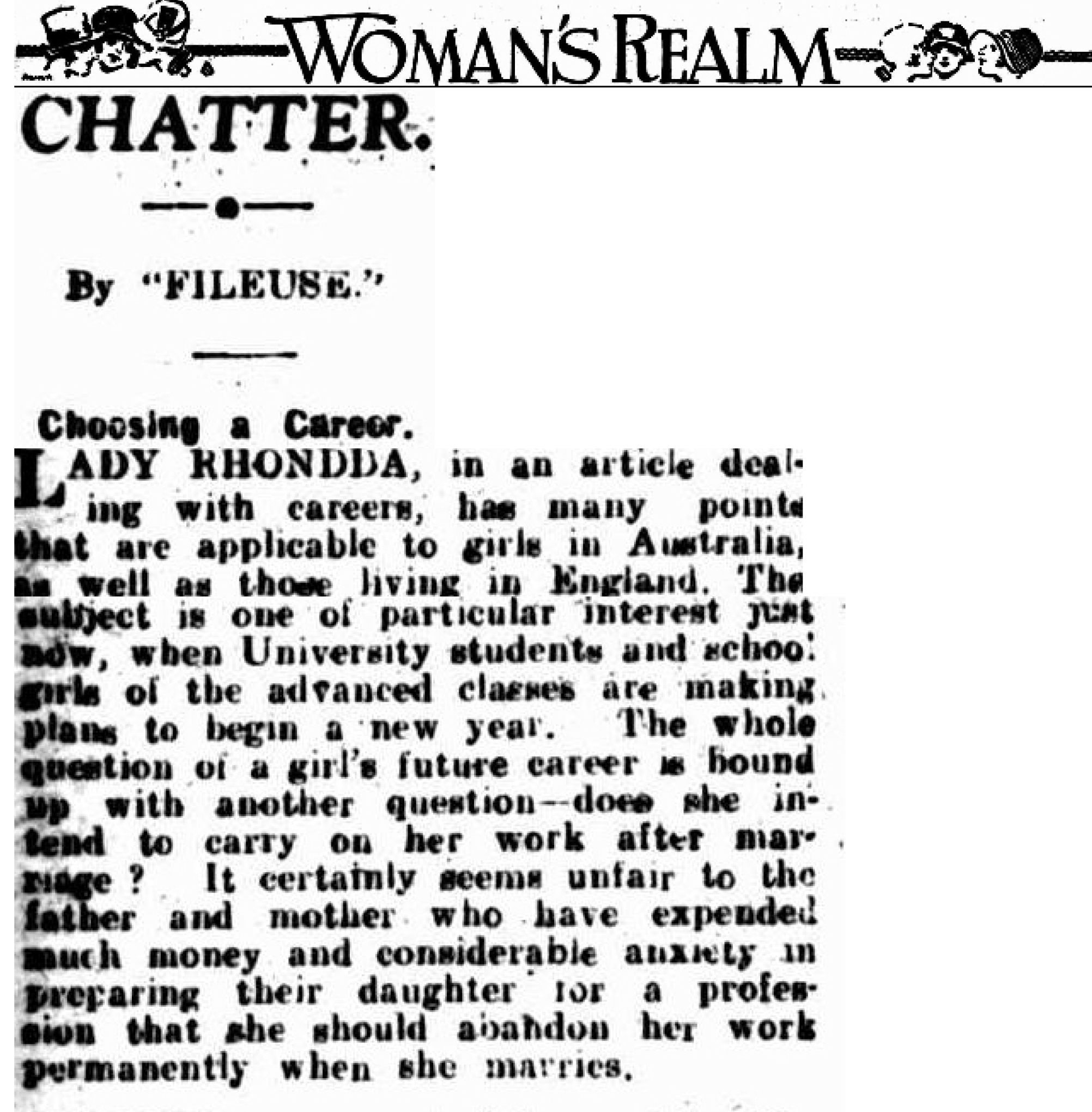
As “Aunt Fileuse”, she ran a very popular children’s pen friend column.

Stella died in 1930 at just 42 years of age in St. Martin’s Hospital, which she had done much to bring into existence through her fund raising work.
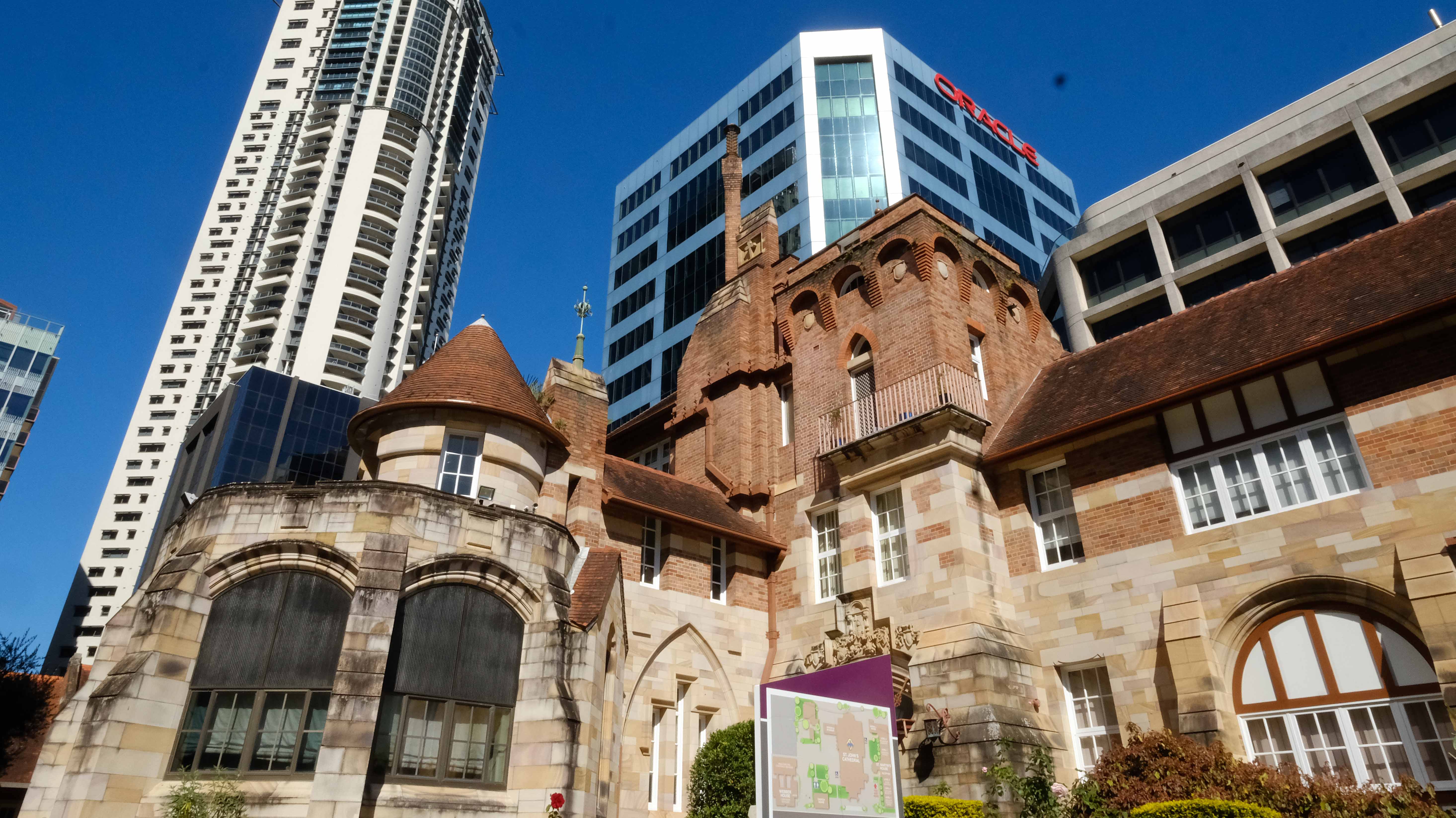
Her death and funeral received wide coverage with one newspaper even publishing three photos of her funeral. A memorial reredos or altar piece was installed in the Seaman’s Chapel in Petrie Bight.
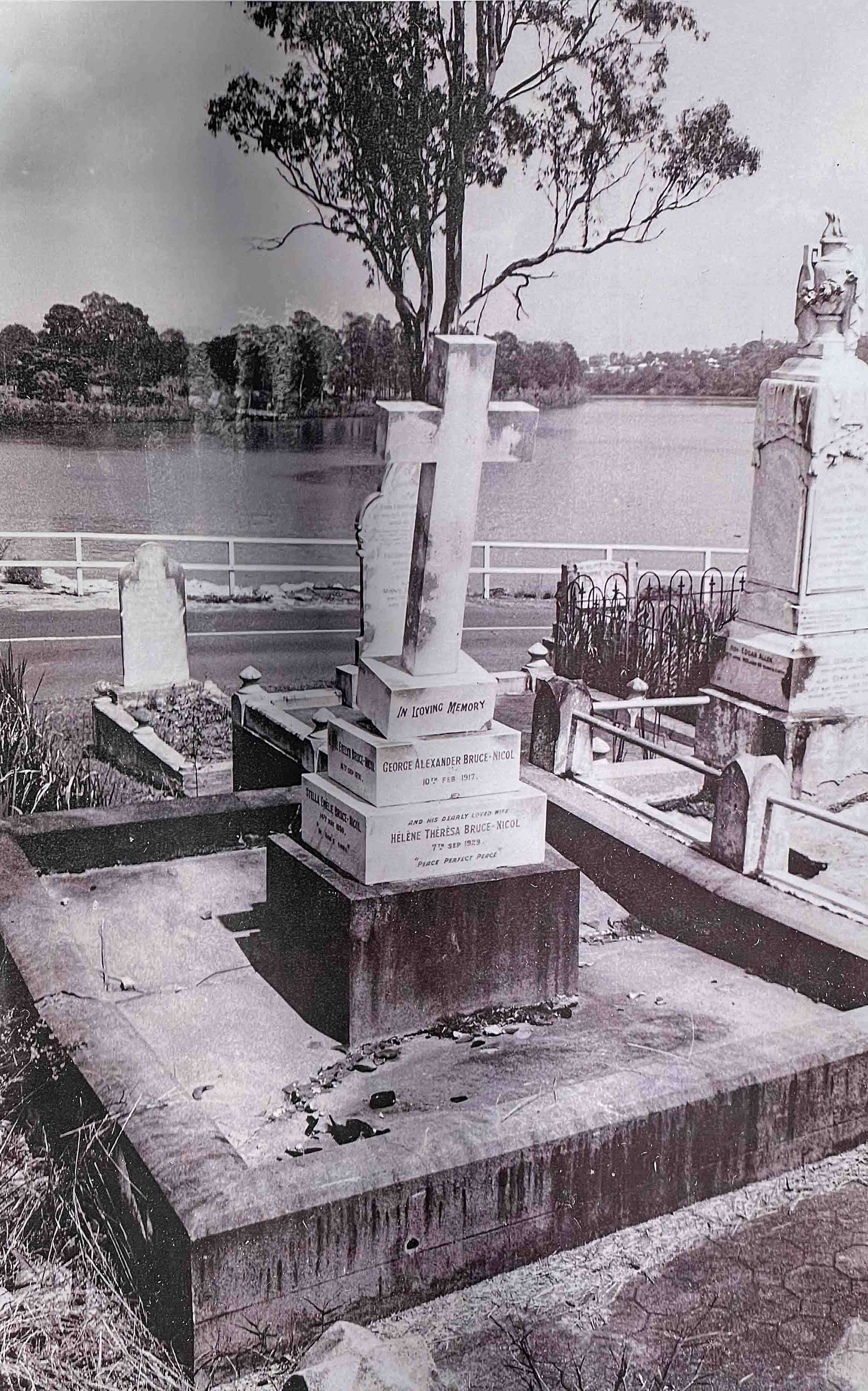
A family grave in South Brisbane cemetery is the resting place of Emile, Sarah, George , Helene, Stella and baby Essie. Unfortunately it was a victim of the Council’s 1970s “beautification scheme” and is now unmarked but a photo exists.
 Highgate Hill and Its History
Pingback: The Telephone Becomes Automatic | Highgate Hill and Its History
Pingback: Mon Abri – Brighton Road | Highgate Hill and Its History